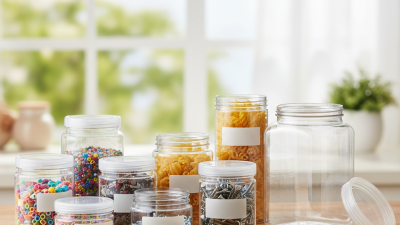
How to Choose Plastic Jar Containers for Your Business?
Choosing Plastic Jar Containers is not just a matter of picking a shape from a catalog. The right container should protect your product, suit your filling process, and make sense for customers using it every day. A wide-mouth jar may help shoppers reach a thick cream, while a narrow opening can work better for powders that need controlled pouring. Small details matter.
Start by considering what the jar will hold. Oils, lotions, dry foods, and granular products can interact differently with packaging materials. Ask suppliers for material specifications and compatibility guidance, then test samples with your actual product. Check for changes in color, odor, texture, or leakage over time. A quick desk review is useful, but it cannot replace a practical test.
Fit matters too. Measure the fill volume, headspace, label area, and storage space before committing to a design. Compare closure options, such as screw caps or liners, and check how they perform on your filling line. Then consider weight, stacking, shipping, and the feel of the jar in a customer’s hand. A beautiful package can still frustrate users.
There is no perfect choice. A thicker wall may feel sturdy but increase shipping weight; a lighter jar may reduce cost but need careful handling. Ask about available samples, production consistency, and quality checks rather than relying on appearance alone. Requirements vary by product and market, so confirm relevant packaging guidance with qualified professionals. A few assumptions may need revisiting. The best decision comes from balancing product protection, practical operations, customer experience, and cost—with evidence from real testing, not guesswork.
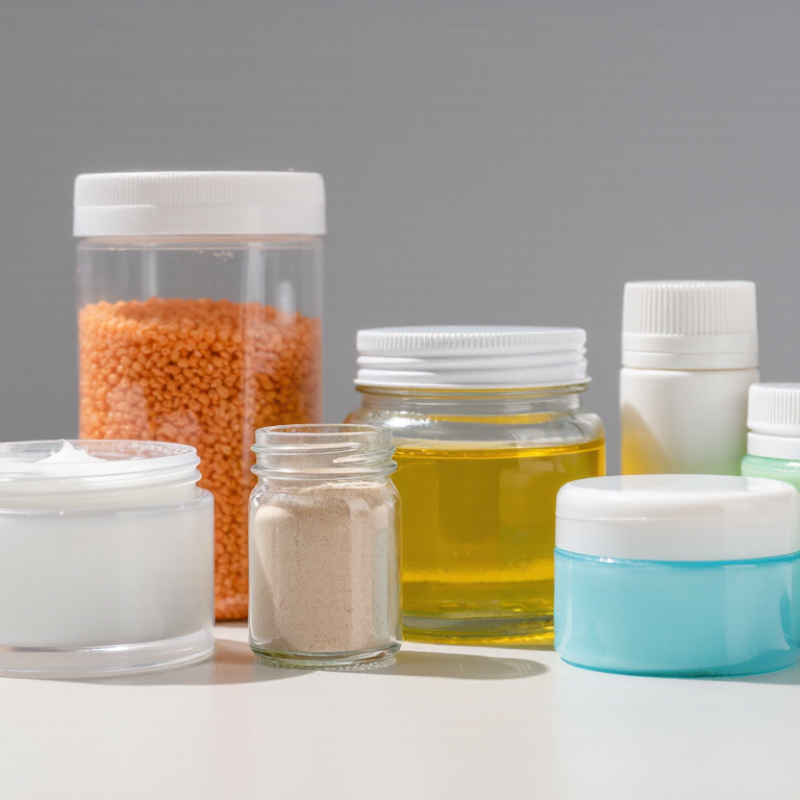
Define Your Product and Packaging Requirements
Start with the product, not the jar shape. Record its fill weight, volume, viscosity, and filling temperature. A 250-gram balm may need a wide mouth for scooping, while a thin lotion needs a controlled pour and a leak-resistant cap. Note whether the formula contains oils, acids, alcohol, or fragrance; these can affect resin compatibility and stress cracking. Test the actual product in sample jars for several weeks, including warm storage and transport vibration. A quick visual check is not enough.
Translate use into measurable requirements: jar capacity, neck finish, wall thickness, closure liner, label area, and tamper evidence. Specify shelf life and barriers to moisture, oxygen, or light. Opaque resin can protect light-sensitive contents, but it hides the fill level. PlasticsEurope’s Plastics – the Fast Facts 2023 reports that packaging represented 39% of European plastics demand in 2022. That scale matters. Yet the figure cannot tell you which jar suits your formula. Ask suppliers for compatibility evidence and dimensional tolerances, then test filled jars on your production line. Leave room for uncertainty. A sample may perform well on a bench and still scuff or leak in transit.
Compare Plastic Materials for Safety and Performance
Choosing a jar starts with the product, not the resin’s reputation. PET provides clear walls and useful gas and moisture barriers, making it suitable when customers need to see the contents. HDPE is usually opaque, tough, and resistant to many everyday chemicals. PP often handles warmer filling conditions, but performance varies by grade and container design. None is automatically safe for every formula.
Check the exact resin grade, colorants, and additives against the intended food or cosmetic use. Then test filled jars for odor, leakage, paneling, and closure fit.
Small details matter: a thick cream can cling to a narrow neck, while a hot-fill product may distort a poorly specified jar. One easy mistake is comparing resin names alone; I would still test the actual filled package. NAPCOR’s 2022 PET Recycling Report recorded a 29.1% U.S. PET bottle recycling rate for that year. That figure applies to bottles, not every jar or local collection system. Recycling access should therefore be checked for the jar’s shape, color, label, and market.
Choose Jar Size, Shape, Closure, and Customization
Choose jar size from the amount customers use, not just the amount your production line can fill. A 250 ml jar may suit a short-use product, while a larger size can reduce refills for frequent users. Leave headspace for the product and closure, then test a filled sample for leakage and dispensing. Too much empty space can make a jar feel wasteful. Test it in hand.
Shape affects both shelf presence and daily handling. Wide-mouth jars make scooping easier, especially when contents are thick; narrower openings can help control pouring. Check whether the jar fits your filling equipment and shipping cartons. A distinctive silhouette may attract attention, but awkward stacking can increase freight and storage costs. I still find this trade-off easy to underestimate.
Match the closure to how the product is used: screw caps offer simple access, while liners can support a tighter seal when compatible with the contents. Confirm fit with real samples; small thread differences matter. Customization can include color, labels, embossing, or tamper-evident features, but each addition affects cost and recyclability. The U.S. EPA’s 2018 Advancing Sustainable Materials Management report estimates that containers and packaging generated 82.2 million tons of U.S. municipal solid waste, or 28.1% of the total. This figure covers many packaging materials, not plastic jars alone, but it reinforces the value of choosing only the features your customers need.
How to Choose Plastic Jar Containers for Your Business
Compare common jar sizes using approximate U.S. fluid-ounce to milliliter conversions.
The chart shows volume equivalents, not guaranteed fill capacities; jar dimensions and usable capacity vary by design. After choosing a size, consider how the jar’s shape suits storage and dispensing, select a compatible closure for the product, and decide whether custom colors, labels, or decoration are needed.
Test Samples Before Placing a Bulk Order
Before placing a bulk order, request production-representative samples, not showroom pieces. Check that the jar, lid, liner, and seal match your intended packaging. Fill samples with your actual product, then observe for leakage, odor changes, discoloration, or softening over time. A jar that looks sturdy when empty may behave differently when filled.
The OECD’s Global Plastics Outlook reports that only 9% of plastic waste was recycled globally in 2019. That figure is a reminder to check resin identification and whether components can be separated. These details do not prove a package is recyclable locally, but they help expose design issues early. Keep a few filled samples for comparison after storage and handling.
Test drops and temperature conditioning before approval. ASTM D5276 describes a free-fall drop test for loaded containers, while ASTM D4332 covers conditioning packaging for testing. Your own trial should reflect real conditions: a filled jar slipping from a packing bench, or a lid exposed to a warm storeroom. Record the fill weight, test conditions, and results. A small sample run still cannot reveal every variation in mass production. Not a guarantee. Request revised samples if the supplier changes resin, mold, or closure parts.