How to Choose Industrial Containers for Your Business?
Choosing Industrial Containers is a practical decision with consequences across storage, handling, transport, and product protection. A container that looks sturdy in a catalogue may still fail when stacked beside a loading-bay door or moved repeatedly by forklift. Fit matters.
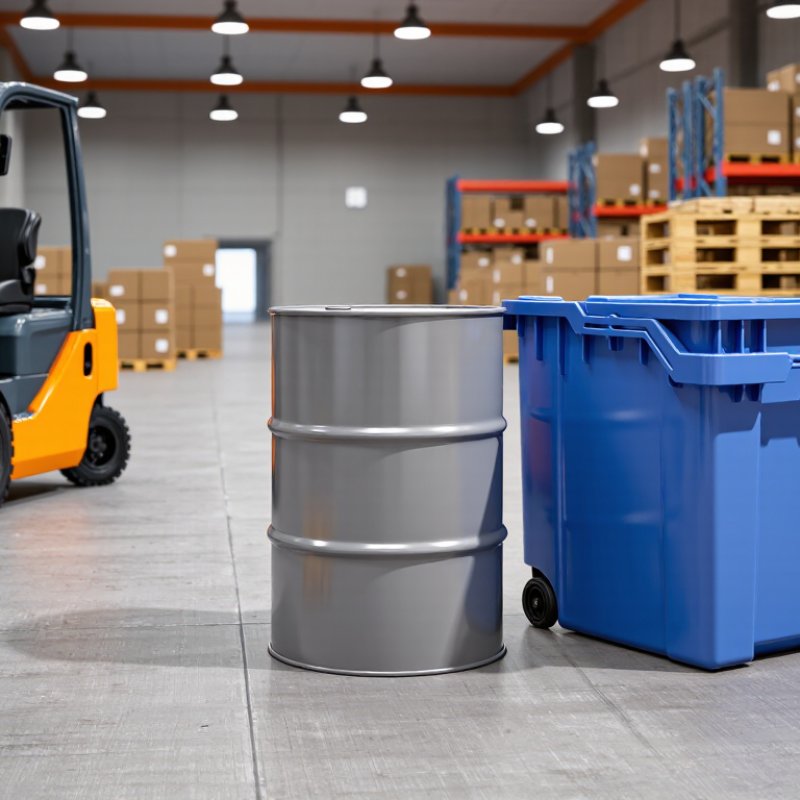
Start with the product itself. Consider its weight, dimensions, sensitivity to moisture, and how often staff will access it. Then examine the working environment: temperature swings, washdown routines, available floor space, and stacking height. A plastic tote may suit frequent handling, while a steel drum may better fit demanding storage needs. The right answer depends on the job, not the material’s reputation.
Packaging author Walter Soroka is a relevant expert, but I cannot verify a direct quotation from him specifically about choosing industrial containers. Rather than invent one, this guide uses his packaging expertise as context and focuses on checkable selection factors. That distinction matters. A confident-sounding quote is not evidence.
Compare capacity, tare weight, closure design, cleanability, and compatibility with your handling equipment. Ask suppliers for specifications and sample units; test a loaded container on the actual route, not only in an office. Listen for rattling lids. Check whether labels remain readable after routine cleaning. Small details can become daily irritations—or costly failures.
There is no perfect container. A choice that saves space may make access awkward, and a durable option may cost more upfront. Document the trade-offs, involve the people who handle the containers, and review performance after a real operating cycle. Then adjust.
Define Your Business’s Container Requirements
Define Your Business’s Container Requirements
Start with the material you handle each day. A container for dry fasteners may need different protection than one holding damp produce or cleaning supplies. Note the contents, weight, temperature range, and any exposure to moisture, dust, or sunlight. Then measure the goods themselves, including handles, lids, and awkward shapes. A container that looks roomy in a catalog can waste shelf space when it does not fit your racks.
Map how containers move through your operation. Measure doorways, carts, shelves, and vehicle bays before choosing dimensions. Check how often staff lift or stack them, and whether full containers need to be carried by hand. Small details matter. A sharp rim or slippery grip can slow a busy shift. Consider cleaning time, too: textured corners may trap residue, even when the container seems easy to wash. That point is easy to miss.
Estimate how many containers you need during peak periods, not just on an average day. Include space for empties and decide whether nesting or stacking would help. Ask workers to test a sample with realistic loads; their feedback may challenge your assumptions. It is tempting to choose the largest capacity, but oversized containers can make handling awkward and inventory harder to track. Requirements may change, so record what works and what needs another look.
How to Choose Industrial Containers for Your Business? — Define Your Business’s Container Requirements
Compare capacity needs: Common nominal sizes include 55-US-gallon drums and 275- or 330-US-gallon IBCs. Choose a container by considering the volume you need to store or move, along with handling, material compatibility, and available space. Liter values are converted from US gallons (1 US gallon = 3.78541 liters).
Compare Materials, Designs, and Durability
Industrial containers should match the load, handling method, and environment—not just the purchase price. Steel resists impact and heat, but it adds weight and may corrode without suitable coatings. High-density polyethylene resists moisture and many chemicals, yet sunlight and temperature extremes can shorten its service life. Corrugated fiberboard is light and easy to recycle, but it performs poorly when wet. Check compatibility using the actual contents and cleaning process. A small test matters.
Design affects durability as much as material. Reinforced corners, secure lids, stackable walls, and accessible handholds can reduce damage during routine handling. For reusable containers, check rated load limits and use relevant tests, such as ASTM D5276 for drop performance and ASTM D642 for compression. The U.S. Environmental Protection Agency’s 2018 waste report found that containers and packaging made up 28.1% of municipal solid waste, with 53.9% recycled. That figure covers household and commercial waste, not industrial containers alone, but it highlights why end-of-life planning belongs in purchasing decisions. Measure a loaded unit through your real route. A container that stacks neatly in a catalog may wobble on a damp floor. That detail is easy to miss.
Select the Right Capacity and Dimensions
Choosing industrial container capacity starts with the material, not the catalog size. Record the typical quantity handled per shift, then check peak demand during busy periods. A 200-liter container may suit steady production but prove awkward when deliveries arrive in larger batches.
Measure the storage area, doorways, aisles, and equipment clearances before ordering. A container that fits a floor plan can still block a pallet jack’s turning path.
Measure twice.
Compare external dimensions with usable internal volume, since wall thickness and lids reduce available space. Leave room for safe filling, drainage, or expansion where the material requires it.
For liquids, verify the container’s rated capacity and compatible handling method.
For solids, consider how easily workers can reach the bottom without excessive lifting or awkward scooping. That detail matters.
I would also test a sample container on the actual route, if possible; measurements alone miss small bumps, tight corners, and workflow habits. The perfect size is not always the largest one. A slightly smaller unit may be easier to move, while an undersized choice can create repeated trips and clutter.
Assess Handling, Storage, and Product Compatibility
Choose an industrial container by tracing how it will be handled from filling to final use. Measure doorways, pallet openings, and lift-truck clearances, then compare them with the container’s loaded dimensions. If workers move containers by hand, check grip points, weight, and whether contents shift during lifting. For automated lines, confirm that bases, rims, and lids fit the equipment. Small details matter. A container that stacks well in a warehouse may still be awkward to pour from at a workstation.
Storage conditions can change the right choice. Measure available rack space and ceiling height, and allow room for safe access. Check whether containers will face sunlight, temperature swings, moisture, or repeated washing. Then assess product compatibility: consider material resistance, possible staining or odor retention, and whether the container could affect product quality. Request written compatibility data from the supplier, and test a sample with the actual product under typical conditions. For example, leave it filled through a normal storage cycle, then inspect for softening, leaks, or changes in the contents. Test it. A tidy spreadsheet can miss a real handling snag, so watch staff use the sample. Their feedback may reveal an inconvenient grip or lid that I would not have noticed on paper.
Verify Safety Standards and Total Ownership Costs
Before comparing prices, confirm that each container suits its load, handling method, and storage conditions. Ask for documented load limits, test results, and material-compatibility information. Check applicable workplace rules too: OSHA’s 29 CFR 1910.176 addresses safe material handling and storage, while 1910.178 covers powered industrial trucks. A container that looks sturdy may still fail when stacked or moved by forklift.
Ownership costs continue after purchase. Include freight, cleaning, repairs, replacement, return logistics, and end-of-life disposal in your comparison. The U.S. Department of Energy’s Federal Energy Management Program life-cycle cost guidance considers costs such as acquisition, operation, maintenance, and disposal. The U.S. EPA’s 2018 Advancing Sustainable Materials Management report counted 82.2 million tons of containers and packaging in municipal solid waste, or 28.1% of that stream. This figure is not specific to industrial containers, but it makes disposal worth pricing. Compare cost per usable trip, not just unit price. Paper quotes can mislead. Damage rates and return distances are often estimates, so label assumptions clearly and revisit them after a trial.