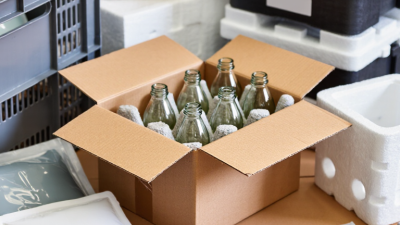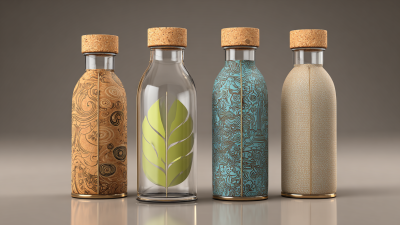
Choosing the right Pet Jars in 2026 means matching the container to the product, supply chain, and customer experience. A clear PET jar can display colorful contents on a retail shelf. An amber or opaque option can help limit light exposure. Wide-mouth designs simplify filling and access, while slimmer profiles may use less shelf space. Details matter. A closure that feels secure, a label that stays smooth, and walls that resist denting can shape how buyers judge quality.
The broader sustainability context deserves care. The OECD’s Global Plastics Outlook reported that only 9% of plastic waste was recycled worldwide in 2019. That figure covers plastics overall, not PET jars specifically. It still shows why buyers should assess local collection systems, material choices, and packaging design rather than rely on broad recyclability claims. Ellen MacArthur’s circular-economy work offers a relevant principle: “designing out waste and pollution, keeping products and materials in use.” It is a useful design lens, not a promise that every package will be recycled.
This guide compares common PET jar types for global buyers, including clear, colored, wide-mouth, and specialty shapes. It also considers practical factors: capacity, resin clarity, wall thickness, closure compatibility, and shipping durability. The right choice depends on the product and destination market. There is no universal winner. Even a well-designed jar can disappoint if its cap leaks or its label wrinkles in transit. I may be missing one detail: supplier samples often reveal more than a specification sheet.
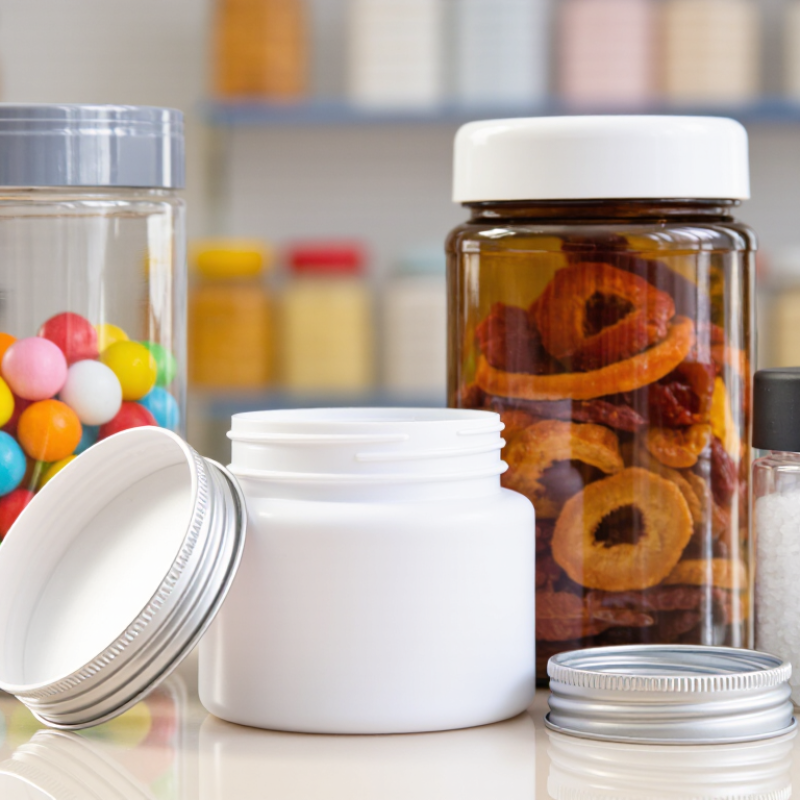
PET jars are made from polyethylene terephthalate, a lightweight plastic valued for clarity and everyday durability. Their transparent walls let buyers inspect contents, color, and fill level at a glance. PET also resists many minor impacts better than glass, which can help reduce breakage during handling. It is not unbreakable. The trade-off is real: PET may be less suitable for high-heat filling or products sensitive to oxygen and aroma transfer.
Common uses include dry foods, powdered products, personal-care creams, and household goods. The right jar depends on the product, closure, and storage conditions. For example, a wide opening can make a jar easier to fill and scoop from, while a tight-fitting lid helps limit spills. Clarity can improve shelf visibility, but it also exposes contents to light. That detail is easy to overlook. Buyers should confirm resin specifications, wall thickness, closure compatibility, and intended-use documentation with their packaging supplier.
Tips: Request samples and test them with the actual product. Check for leaks after transport-style handling. Compare jar dimensions with filling equipment and shelf space. If the contents are heat-sensitive, verify temperature limits before choosing PET.
2026 Best Types of PET Jars for Global Buyers
How PET Jars Are Classified by Shape, Neck, and Capacity
PET jars are often compared by three practical features: body shape, neck finish, and usable capacity. Round jars suit creams, powders, and pantry products because their smooth walls are easy to label and clean. Square jars use shelf space efficiently, though tight corners can make emptying thicker contents less convenient. Wide-mouth openings help users reach contents with a scoop or fingers. Check the neck finish against the cap and liner; similar-looking threads may not seal alike.
Capacity bands are useful, but not universal. Buyers might group jars as small (50–150 mL), medium (200–500 mL), or large (750 mL and above), then confirm dimensions against the product and pack line. A tall 300 mL jar can feel less stable than a squat one. Small detail. NAPCOR’s 2023 PET Recycling Report puts the U.S. PET bottle recycling rate at 33%. Its figures concern bottles, not jars, so they should not be treated as jar-specific performance data. That distinction matters. Shape, labels, color, and closure choices can affect how a jar fits local sorting systems; testing a filled sample is still wiser than relying on capacity alone.
| Jar Type | Shape and Design | Typical Neck or Closure Format | Common Capacity Range | Typical Uses | Buying Considerations |
|---|---|---|---|---|---|
| Round wide-mouth jar | Cylindrical body with a broad opening and a stable base. | Screw finish; neck size and thread specification depend on the jar design and compatible closure. | About 100 ml to 2,000 ml | Powders, supplements, confectionery, dried foods, and personal-care products. | Check opening diameter, closure compatibility, product access, and available tamper-evident options. |
| Round straight-sided jar | Mostly vertical walls provide a broad, even label area. | Usually a screw finish; the finish must match the selected cap or liner. | About 30 ml to 1,000 ml | Cosmetics, creams, balms, spices, and small dry goods. | Compare label-panel dimensions, wall thickness, and the intended filling and capping process. |
| Square jar | Square or rectangular footprint with flatter faces for labeling and efficient shelf arrangement. | Typically a screw finish; exact neck dimensions vary by design. | About 100 ml to 1,000 ml | Spices, snacks, confectionery, craft supplies, and selected personal-care products. | Review corner geometry, stacking stability, label fit, and whether the closure is included in the supply specification. |
| Hexagonal jar | Multi-sided body with several flat label and display faces. | Usually a screw finish; confirm the matching cap and sealing components. | About 100 ml to 750 ml | Confectionery, dry foods, gift packaging, and decorative retail products. | Check usable internal volume, pack-out efficiency, and whether the shape suits automated handling. |
| Low-profile jar | Short, broad body with a relatively wide opening. | Wide screw finish; the opening and closure dimensions are model-specific. | About 30 ml to 500 ml | Face creams, balms, gels, sample products, and specialty powders. | Assess product access, headspace, sealing requirements, and the suitability of the jar for the filling method. |
| Large-capacity storage jar | Round or square body designed for higher-volume storage and handling. | Screw finish, commonly paired with a larger matching closure; verify the exact finish specification. | About 1,000 ml to 5,000 ml | Bulk dry foods, ingredients, household storage, and selected industrial products. | Confirm filled weight, grip and handling needs, transport protection, and performance under the intended storage conditions. |
Note: Capacity ranges are indicative market ranges, not fixed standards. Neck dimensions, thread finishes, closure styles, and jar availability vary by design and supplier. Confirm compatibility with a physical sample and the required product, filling process, and destination-market regulations.
PET jar selection starts with the product’s texture, filling method, and shelf-life needs. Wide-mouth jars suit powders, bath salts, gummies, and chunky foods because scoops and fingers can reach the contents easily. Straight-sided jars work well for creams and dry mixes; their broad labels leave room for clear ingredient information. Small details matter. A narrow neck may slow filling, while a slippery shoulder can make a full jar awkward to grip. Fit matters.
Clear PET displays colors and fill levels, making it useful for dry snacks and personal-care products that benefit from shelf visibility. For light-sensitive contents, tinted or opaque PET can reduce exposure, though buyers should validate protection through product testing. Square jars pack tightly on pallets and shelves; round jars are generally easier to grip and clean. OECD’s Global Plastics Outlook reports that packaging represented 31% of global plastics use in 2019, underscoring the scale of packaging decisions. That figure covers plastics broadly, not PET jars specifically. A tamper-evident closure can add visible evidence of opening, but it does not replace a compatible seal or transit testing. Recycling access also varies by market, so verify local acceptance for the jar, closure, label, and color. Some choices remain compromises. A dark jar may protect contents but hide the product.
A PET jar should fit the product before it fits the shelf. For powders, gummies, and dry snacks, a wide-mouth jar makes filling and scooping easier. A straight-sided shape also leaves room for a clear label and stable stacking. For lotions or creams, check that the opening suits the dispensing method and that the closure limits leaks during shipping. PET is clear and lightweight, but it is not a universal barrier. Products sensitive to oxygen, moisture, or light may need a different material, a protective layer, or tinted packaging. Test the actual formula. Small compatibility checks can prevent costly surprises.
Market conditions matter, too. OECD’s Global Plastics Outlook reports that packaging generated 40% of global plastic waste in 2019. That figure covers plastic packaging broadly, not PET jars alone, but it makes recyclability a practical design concern. In the United States, NAPCOR reported a 33% PET bottle recycling rate for 2023. Bottle data cannot predict jar recovery exactly; local collection rules and sorting systems differ. Still, a simple, mostly clear jar with a compatible closure may be easier to sort than a heavily decorated one. Review local recycling guidance before choosing colors, labels, and seals. Sometimes the prettiest jar is the harder one to recover.
Global buyers should assess PET jars by destination-market requirements, not appearance alone. For food, personal-care, or household use, request material specifications, food-contact declarations where applicable, and test records for the intended contents. A jar holding an acidic formula may need different compatibility checks from one holding dry powder. Confirm the neck finish, cap liner, tamper-evident feature, and label area against the filling line. Small details matter. Ask suppliers to provide lot traceability and written change-control procedures, especially when resin or colorants may vary.
Recyclability also affects sourcing decisions. NAPCOR’s 2023 report put the U.S. PET bottle recycling rate at 29.1% in 2022. That figure concerns bottles, not every jar format, so buyers should avoid assuming identical recovery outcomes. Clear PET can support easier sorting in some systems; dark colors, sleeves, and mixed materials may complicate it. Verify local collection and sorting practices before approving a design. A neat sample is not the whole story.
Tip: Request samples in the final resin, color, and closure, then test them on your filling line. Check leakage after transport simulation and inspect labels after condensation or handling. For customization, approve a signed specification sheet covering dimensions, weight tolerance, color reference, and packaging method. Also compare lead times for standard and custom molds; tooling can extend launch schedules, and forecasts are often imperfect. Keep a backup supplier qualified where volumes justify it.