Why Choose a Spice Rack Organizer?
Why choose a Spice Rack Organizer? The answer begins with a familiar kitchen problem: valuable seasonings disappear behind taller bottles. A crowded cabinet wastes time, duplicates purchases, and makes cooking feel less controlled. One small jar may hide three others. That detail matters during a busy dinner.
The National Kitchen & Bath Association’s 2024 Kitchen Trends Report continues to identify practical storage as a major kitchen design priority. Houzz’s 2024 U.S. Kitchen Trends Study also highlights organized storage upgrades as a common renovation focus. These findings reflect a broader consumer expectation: kitchen products should improve access, visibility, and daily efficiency. A Spice Rack Organizer supports that expectation without requiring a full remodel. It can create labeled rows, use narrow wall space, or fit inside a drawer. The best designs keep frequently used paprika, cumin, and pepper within one-hand reach.
There is a limitation, however. An organizer cannot solve every storage problem. Oversized containers, irregular shelves, and poor labeling can still create clutter. This deserves honest consideration. Product choice should follow the kitchen, not the other way around. Check shelf depth, bottle height, load capacity, and cleaning requirements before buying. The USDA FoodKeeper guidance also reminds consumers that dried spices lose quality over time, even when stored safely. Better visibility may therefore reduce forgotten, outdated jars. A thoughtful organizer does more than look tidy. It helps households use what they already own, purchase more carefully, and prepare meals with less unnecessary searching.
What Is a Spice Rack Organizer?
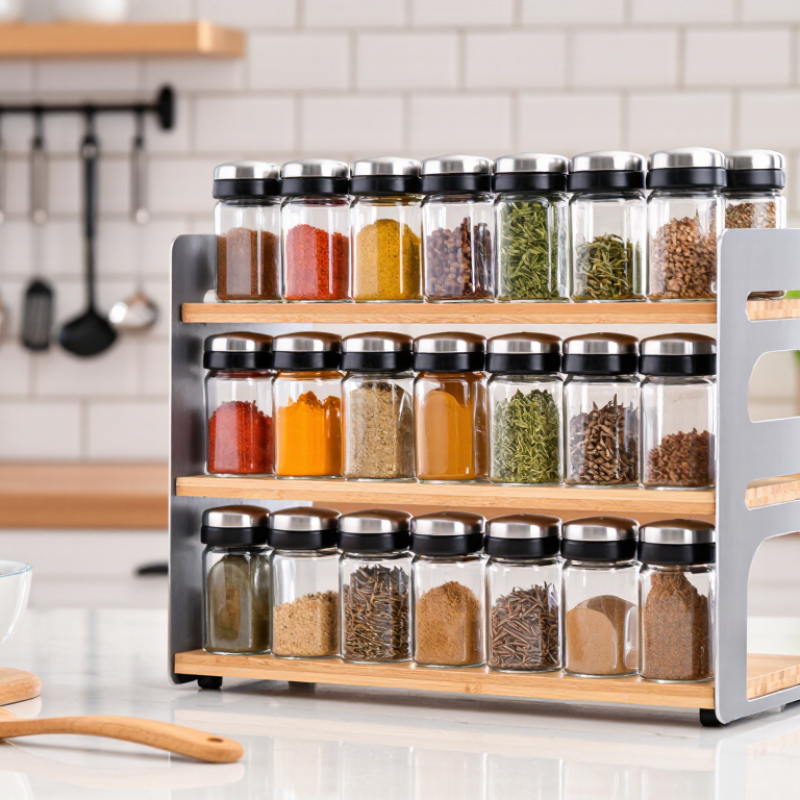
A spice rack organizer is a storage tool designed to keep seasonings visible, grouped, and easy to reach. It may use shelves, tiers, drawers, or narrow compartments. The main purpose is simple: reduce clutter around the cooking area. Instead of searching through crowded cabinets, you can identify cumin, paprika, or dried herbs at a glance.
A well-designed organizer supports safer and more consistent cooking habits. Place frequently used spices near the preparation area, but keep them away from steam, direct heat, and strong sunlight. Moisture can cause powdery seasonings to harden. Clear labels also help, especially when several jars look nearly identical. In professional kitchen planning, easy access matters because repeated reaching and bending can waste time.
Small details make a difference. A raised shelf can prevent rear containers from disappearing. Non-slip surfaces help keep jars steady when a cabinet door closes. Adjustable sections may fit tall bottles, though they can leave awkward gaps. I once arranged spices by color, and it looked attractive but slowed my cooking. Grouping them by frequency and cuisine worked better.
It is not a cure-all.
An organizer cannot replace regular cleaning or sensible storage. Check old labels, remove spilled powder, and notice which seasonings remain untouched. Your first arrangement may fail. That feedback is useful.
How It Improves Kitchen Storage and Accessibility
A spice rack organizer can make kitchen storage more practical and accessible. In my own kitchen, loose jars often disappeared behind cooking oils and mixing bowls. A tiered rack brought them into clear view. I could read labels without moving three containers first. That small change reduced searching during busy meal preparation. It also helped me notice duplicate spices before buying more.
Good organization depends on more than appearance. Grouping spices by use, such as baking, grilling, or everyday cooking, makes retrieval faster. Adjustable shelves can fit tall bottles, while shallow compartments keep smaller jars upright. Labels facing forward improve readability, especially for anyone with limited reach or vision. The rack should also stay away from heat and moisture. Steam near a stove can affect spice quality over time. It is not a magic fix. I still misplace a jar when I rush.
A reliable setup leaves enough space for hands to remove each container easily. Overcrowding creates the same problem as a messy cabinet. Cleaning the rack occasionally prevents dust and sticky residue from building up. I prefer keeping frequently used spices at eye level and seasonal ones higher up. This arrangement may need adjustment as cooking habits change. That flexibility matters more than making the shelf look perfect.
Key Features to Consider When Choosing One
Why Choose a Spice Rack Organizer?
Key Features to Consider When Choosing One
A spice rack organizer should make cooking faster, safer, and less wasteful. NSF International’s 2011 Household Germ Study found coliform bacteria on 48% of tested spice containers. That finding makes cleanability more than a design preference. Choose a rack with smooth, washable surfaces and enough airflow. Avoid deep corners that collect powder and oil. I once used a narrow rack that looked elegant, but jars became difficult to remove. It was attractive, yet impractical.
Size and visibility matter every day. Measure your cabinet depth, shelf height, and jar diameter before buying. Tiered shelves keep labels visible without forcing you to move every container. Adjustable dividers can handle different jar shapes, but loose parts may become annoying. The USDA FoodKeeper guidance suggests many dried herbs and spices maintain best quality for about one to two years. A visible organizer helps you notice fading color, clumping, or forgotten jars.
Tips: Keep frequently used spices at eye level. Store them away from steam and direct heat. Add purchase dates with a small removable label. Test the rack with your heaviest jars before filling it completely. No organizer is perfect. A compact model may save space but reduce capacity, while a large one can encourage unnecessary stockpiling. Choose the system that matches your cooking habits, not an ideal kitchen.
Which Spice Rack Design Fits Your Kitchen Best?
A spice rack organizer earns its place by making small ingredients visible, reachable, and protected from heat. The best design depends on your kitchen’s layout, cooking habits, and available depth. Houzz’s 2024 U.S. Kitchen Trends Study reports that 76% of renovating homeowners upgraded their cabinets. That figure signals a practical shift toward better storage, not merely prettier surfaces.
For narrow drawers, a tiered insert works well because labels face upward and jars remain easy to compare. Choose one with adjustable dividers. Fixed slots can waste space when jar sizes change. A wall-mounted rack suits frequent cooks with unused backsplash space, but it may collect grease near the range. Pull-out cabinet racks offer excellent visibility in deep cabinets. They need accurate measurements, though. A few millimeters matter.
Small kitchens need discipline.
The National Kitchen & Bath Association’s 2024 Kitchen Trends Report continues to emphasize functional storage and accessibility in kitchen planning. That supports choosing organizers that reduce bending, reaching, and duplicate purchases. Before buying, measure cabinet width, depth, and door clearance. Leave room for your fingers. I would avoid placing delicate herbs above a hot cooktop, even when the rack looks convenient. Heat, light, and steam can weaken aroma over time. One imperfect detail remains: a beautifully organized rack will not fix overbuying. Review dates and use frequency honestly. The right design is the one you can maintain during a hurried weeknight meal.
How to Organize and Maintain Your Spice Collection
A spice rack organizer earns its place by making every jar visible and reachable. In my kitchen, scattered bottles caused duplicate purchases and forgotten seasonings. A clear arrangement saves time during busy cooking. It also reduces unnecessary clutter around the stove.
Start by removing every container from the cabinet. Check the aroma, texture, and best-by date of each spice. Best-by dates usually describe quality, not immediate safety. Discard spices with mold, insects, or moisture damage. Group them by use, such as baking, herbs, heat, and everyday blends. Keep frequently used jars at eye level. Store delicate herbs away from heat, steam, and direct sunlight. A dry, cool cabinet helps preserve flavor. Label containers with the spice name and purchase month. Small labels prevent guessing.
My first layout looked tidy but worked poorly. Tall jars blocked shorter ones behind them. I changed to a tiered arrangement and kept similar shapes together. It was better, though not perfect. Some jars still drift after repeated use. A monthly check helps restore order and reveals stale supplies. Wipe the rack with a slightly damp cloth, then dry it fully. Avoid washing wooden or porous organizers without checking their care needs. Keep lids tightly closed after each use. Leave enough space to remove one jar without knocking over three others. This small detail matters when cooking with wet hands.