Top 10 Types of Foil Pouches for Global Buyers
Choosing the right Foil Pouch involves more than comparing shapes or prices. Buyers must consider the product, filling process, storage conditions, and shipping route. A dry snack may need a resealable zipper, while a liquid product may require a secure spout and dependable seals. Small details matter.
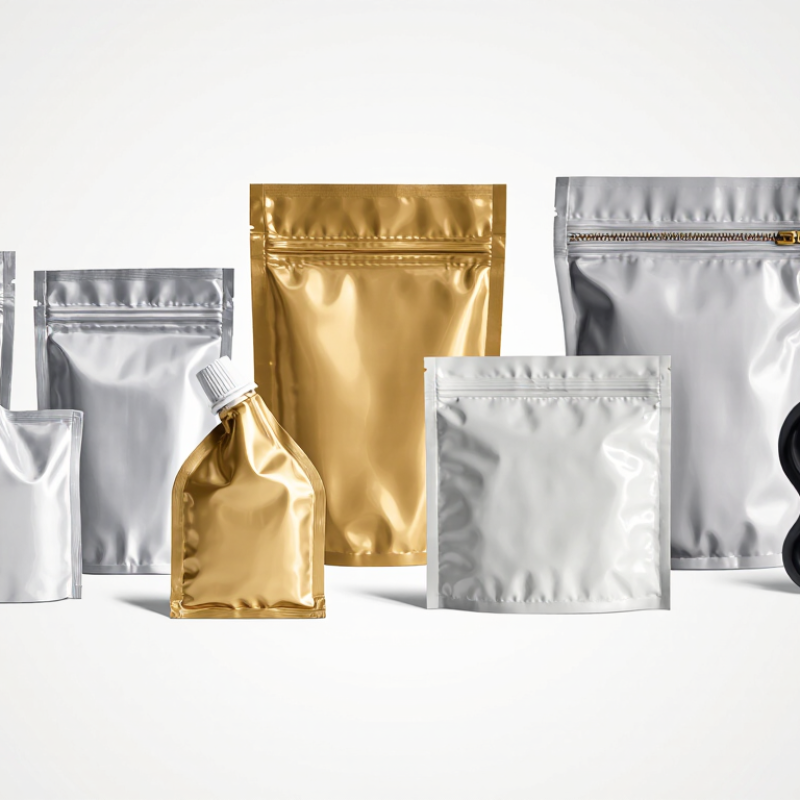
This guide explores ten common pouch types, including stand-up, flat, side-gusset, quad-seal, zipper, spouted, retort, vacuum, sachet, and shaped pouches. Each format serves different handling and display needs. A pouch that stands neatly on a shelf may not suit a high-speed filling line. Likewise, a compact sachet can reduce package size, but its opening may be less convenient for repeat use.
Material structure deserves equal attention. Foil laminates can help protect contents from light, oxygen, and moisture, but performance depends on the complete package and its seals. Ask suppliers for specifications and samples, then check filling behavior, seal quality, and storage performance with your own product. Test before scaling.
Global buyers should also confirm print requirements, order quantities, lead times, and documentation with suppliers. Packaging terms can vary between regions, so clarify construction rather than relying on a product name alone. One limitation is worth noting: these ten categories can overlap, and no format is best for every application. A practical choice balances protection, usability, cost, and reliable production.
Foil Pouch Fundamentals: Typical 6–9 μm Aluminum Foil Gauge
In a foil pouch laminate, the aluminum layer is often around 6–9 μm thick. That equals 0.006–0.009 mm. The foil helps block light, oxygen, and moisture, while plastic layers usually provide sealing strength and handling flexibility. The exact structure varies with the product and packing process.
A 6 μm layer can reduce material use and may suit applications where lighter packaging is a priority. A 9 μm layer offers more metal, but it does not guarantee a better pouch. Performance also depends on the other laminate layers, pouch seams, and converting quality. Gauge is an easy number to compare. It is not the whole story.
During converting, foil can develop tiny cracks or pinholes, especially after repeated flexing or rough handling. These flaws may weaken barrier performance without being visible to the eye. Buyers should review the complete laminate specification and request tests on finished pouches, not just flat film. Useful checks include seal integrity and barrier testing under stated conditions. Results can vary with test methods and temperature, so ask how samples were evaluated. A thicker foil may help, but it is not a substitute for careful design.
Laminated Structures: PET/AL/PE and ASTM F1249 and D3985 Barrier Tests
PET/AL/PE is a common laminated structure for foil pouches. PET provides a printable, dimensionally stable outer layer, while aluminum foil limits light, oxygen, and moisture transmission. The PE inner layer supports sealing and product contact. Layer thickness and adhesive quality matter. So does pouch converting.
ASTM F1249 measures water vapor transmission through a film under controlled conditions. ASTM D3985 measures oxygen transmission. These results help compare structures, but they are not automatic guarantees of finished-pouch performance. Ask for the test temperature, relative humidity, specimen thickness, and reported units. A pouch may also face sharp folds, rough handling, or imperfect seals. Small flaws matter. A neat lab result can still disappoint if the foil develops pinholes during converting or distribution. This is worth checking with samples from the actual production process.
Tips: Compare test reports using the same conditions, not just headline barrier figures. Request seal-strength and leak checks on finished pouches, too. Keep a retained sample for inspection after transport simulation. One detail is easy to miss: real storage conditions may differ from the laboratory setup. Ask whether the proposed structure suits your product, filling temperature, and expected shelf life.
Top 10 Foil Pouch Types by Structure, Closure, and End Use
Foil pouch selection starts with structure. The ten common types are three-side-seal, pillow, stand-up, side-gusset, quad-seal, spouted, zipper, retort, vacuum, and single-serve sachet pouches. Flat seals suit lightweight portions; gussets add shelf depth. Stand-up formats display well, while spouts help with pourable foods. Retort pouches need heat-resistant laminates and validated seals. Vacuum pouches reduce trapped air around products, but are not suitable for every item.
Closures and end use shape the remaining choices. Zippers support repeated access; tear notches allow quick opening, though they cannot reseal. Sachets fit samples and measured servings. For dry powders, moisture barriers matter; for oily foods, seal strength and material compatibility deserve testing. The Flexible Packaging Association’s 2024 State of the U.S. Flexible Packaging Industry report valued U.S. industry sales at $42.9 billion in 2023. That figure signals a sizable sector, not a guarantee that one pouch format suits every buyer.
Tips: Ask suppliers for laminate specifications, seal-test results, and samples filled with your actual product. Check corners and zipper tracks after transport simulation. A thinner pouch may reduce material use, but barrier performance can suffer. That trade-off is easy to underestimate.
Performance Metrics: OTR, WVTR, Seal Strength, and Shelf-Life Needs
Foil pouch selection should start with the product’s sensitivity, not a generic “high-barrier” claim. Oxygen transmission rate (OTR) and water-vapor transmission rate (WVTR) must be compared at stated temperature and humidity. European Aluminium Foil Association technical guidance describes intact foil as an exceptionally strong barrier, but pinholes, folds, and poor seals can weaken real packs. Published converter data commonly place foil laminates below 0.1 cc/m²/day OTR and 0.1 g/m²/day WVTR; treat these as screening figures, not guaranteed pouch performance. Test finished samples using ASTM F1927 for oxygen and ASTM F1249 for water vapor. Conditions matter.
Seal strength needs equal attention. ASTM F88 measures seal force, but the acceptable value depends on pouch size, filling speed, and product weight. A seal that looks smooth may still leak around a gusset or zipper. Check peel strength across several spots, then run leak or burst tests on filled packs. Small defects matter.
Shelf life is a product-specific result, not a laminate promise. A dry powder, roasted snack, and moisture-sensitive ingredient need different barrier targets. Set an OTR and WVTR limit from the intended storage period, then confirm it through real-time and accelerated shelf-life trials. Record the test temperature, humidity, and seal condition. Teams sometimes overlook these details; that makes supplier comparisons misleading.
Global Buyer Checks: Food-Contact Rules, Dimensions, MOQ, and Recycling
Food-contact rules vary by destination and by what the pouch will hold. Ask for a declaration of compliance and relevant migration-test reports for the exact pouch structure, including its films, inks, and adhesives. Confirm that the evidence covers your food type, filling temperature, and storage conditions. Requirements can differ between markets. Do not rely on a generic certificate. Keep the documents with your purchase specifications.
Dimensions need equal care. Request usable internal width and height, gusset depth, seal width, and manufacturing tolerances. A pouch that looks large in a drawing may leave too little headspace once filled. Small details matter. Confirm the intended filling method and test samples on your own line before approving production. Compare minimum order quantities by size, print treatment, and material; one quoted MOQ may not apply to every variation.
Tips: Ask for a physical sample and written specifications. Check recycling claims against local collection systems, since foil laminates are not accepted everywhere. Test before scaling. A packaging choice can look practical on paper, yet need another review after a real filling trial.