Understanding the Sand Molding Process for Better Castings?
The sand molding process is crucial in manufacturing quality castings. It involves creating molds from sand mixtures to form various metal shapes. Understanding this method can enhance casting precision and durability.
Many foundries rely on the sand molding process due to its versatility. Various sands, binders, and additives can alter the mold’s properties, affecting the final product. However, inconsistencies in sand quality can lead to defects. Small changes in moisture levels can also impact the mold’s strength.
Workers in this field often face challenges. They must balance efficiency with quality. Attention to detail is vital yet sometimes overlooked under tight deadlines. Recognizing these factors can lead to improvements in both the process and the products created. Understanding the sand molding process is a step toward achieving better outcomes in metal casting.
Overview of Sand Molding in Metal Casting Processes
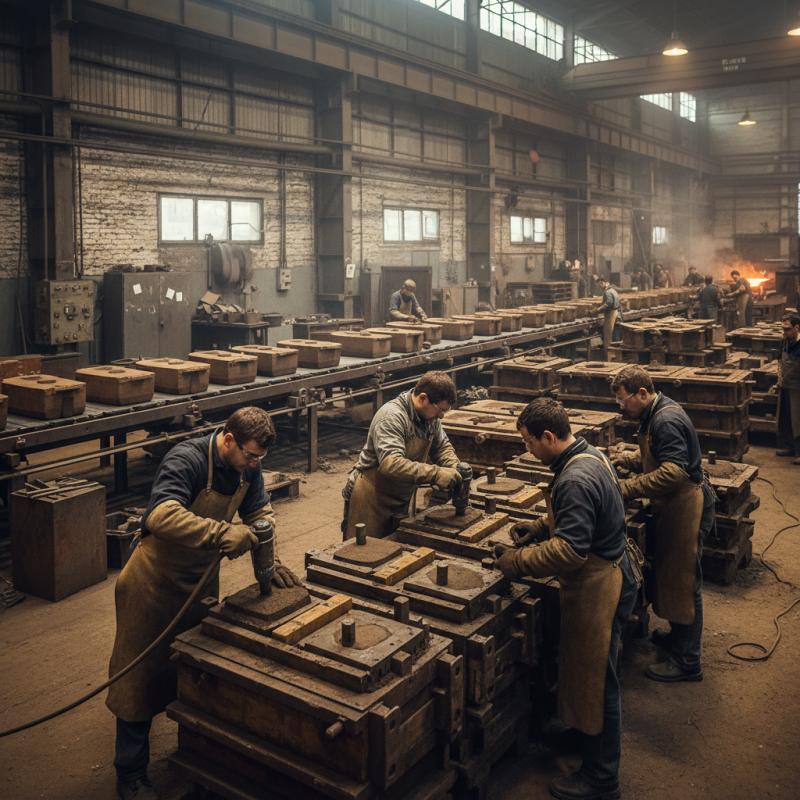
Sand molding is a key technique in metal casting. It involves creating molds from sand to shape molten metal. The process begins with mixing sand, clay, and water. This mixture forms a durable mold. It can handle high temperatures required for molten metal.
The sand mold is shaped using patterns. These patterns are often made of metal or wood. Accuracy is crucial. Any slight deviation can lead to defects in the final casting. Sometimes, even with precision, imperfections arise. Issues like sand sticking or uneven cooling can occur.
Once the mold is prepared, metal is poured in. The cooling time can vary based on the metal type and mold size. Castings must be monitored closely. After cooling, the mold is broken apart. This step can be messy, with sand spilling everywhere. Yet, it is vital for ensuring the casting is extracted correctly. Proper inspection of the casting follows. This helps to identify any flaws or areas for improvement.
Key Materials Used in Sand Molding for High-Quality Castings
The sand molding process is crucial for creating high-quality castings. One of the key materials used in this process is silica sand. Silica offers excellent thermal properties and is abundant. Its grain shape and size can impact the final casting. Well-graded sand helps create a stronger mold, but choosing the right mixture is often challenging.
Another essential component is bonding agents. Clay is commonly used to bind the sand particles together. This bonding increases mold strength and improves the surface finish of castings. However, excessive clay can lead to problems. It may cause defects in the final product, prompting users to find an optimal balance.
Additives also play a significant role. Some materials enhance the performance of sand molds. Others can reduce moisture content. However, choosing the right additives often requires experimentation. The process isn’t always straightforward, and miscalculations can lead to poor outcomes. Striking the right balance is vital for achieving high-quality castings.
Step-by-Step Sand Molding Procedure for Effective Results
The sand molding process is crucial for creating effective castings. To achieve the best results, a clear and structured approach is essential. Start by selecting the right sand mixture. The quality of the sand can greatly affect the final product. Pay attention to the grain size and moisture content. Too much moisture can cause defects in the casting. Make sure the sand is uniform and well-mixed.
Next, prepare the mold. This involves compacting the sand into the mold box. Use proper tools to ensure even compaction. Inconsistent packing can lead to weak areas in the casting. After shaping the mold, carefully remove the pattern. This step requires a delicate touch. A rough removal might damage the mold's surface, causing imperfections.
Finally, pour the molten metal into the mold. Timing is critical here. If the metal cools too quickly, it can prevent proper filling. Monitor the pouring process closely. Mistakes can happen, leading to unnecessary waste. After the metal sets, inspect the casting. Look for flaws and evaluate the mold's performance. Each casting offers valuable lessons for improvement. Learning from these outcomes will enhance your sand molding technique.
Understanding the Sand Molding Process for Better Castings
| Step | Description | Materials Required | Tools Needed | Time Required |
| 1 | Prepare the mold frame | Wood, metal or plastic | Saw, drill, screws | 30 minutes |
| 2 | Create the pattern | Wood or plastic | Carving tools | 1 to 2 hours |
| 3 | Prepare the sand mixture | Sand, clay, water | Mixing tools | 30 minutes |
| 4 | Pack the sand around the pattern | Sand mixture | Hand tools | 1 hour |
| 5 | Remove the pattern | None | Prying tool | 15 minutes |
| 6 | Pour the molten metal | Metal alloy | Crucible, furnace | 30 minutes |
| 7 | Let the casting cool | None | None | 1 hour |
Common Challenges and Solutions in Sand Molding Techniques
The sand molding process plays a vital role in metal casting. However, it comes with its own set of challenges. One common issue is the quality of the sand used. Researchers indicate that the right grain size directly affects mold strength and casting precision. For instance, coarser sands may lead to defects in the final product. This can result in casting failures and increased costs.
Another challenge is moisture content in sand mixtures. Too much moisture can cause mold collapse during the pouring process. A study shows that maintaining an optimal moisture level can improve the integrity of the mold. Companies must regularly test their sand mixtures to ensure they are within acceptable ranges. A lack of attention to this detail can mean costly reworks.
Moreover, the molding process itself can introduce flaws. The way sand is packed impacts the final casting. Inadequate packing can lead to weak spots or air pockets in the mold. Adjusting the compaction method may prevent these issues. Companies should experiment with different techniques to find what works best for their specific needs.
Innovations and Future Trends in Sand Molding Technologies
The sand molding process is evolving rapidly with new technologies. Innovations are shaping the future of casting. Robotics and automation are playing key roles in this transformation. They enhance precision and efficiency, reducing human error. This shift could lead to better quality castings and faster production cycles.
Additive manufacturing is also making strides in sand molding. 3D printing allows for complex designs that traditional methods struggle to achieve. However, challenges remain. Materials used in this process need refinement for durability. The integration of these technologies is not seamless yet. It requires investment and skilled workers to adapt.
Sustainability is a pressing concern too. Green technologies in sand molding aim to reduce waste and energy consumption. Recycling sand is gaining attention but faces hurdles. Ensuring a consistent supply of quality materials is still a challenge. The industry needs to focus on these issues to fully embrace innovation.