How to Optimize Tandem Cold Rolling Mill Efficiency?
In the steel manufacturing industry, the performance of the tandem cold rolling mill is crucial. This equipment plays a significant role in producing high-quality steel sheets. Reports indicate that optimizing the efficiency of these mills can significantly reduce operational costs. For instance, energy consumption in cold rolling processes can account for over 30% of total production costs.
To enhance productivity, manufacturers are focusing on several key areas. Technological upgrades are essential to improve speed and precision. Data from recent studies show that mills equipped with advanced automation can achieve up to 20% higher throughput. However, these upgrades require substantial initial investments, which can deter smaller operations.
Reflecting on current practices, many mills still face inefficiencies. Inconsistent material quality and outdated machinery contribute to production delays. Moreover, operators often lack real-time data analysis tools, limiting their ability to make informed decisions. Addressing these challenges is imperative for staying competitive in an evolving market.
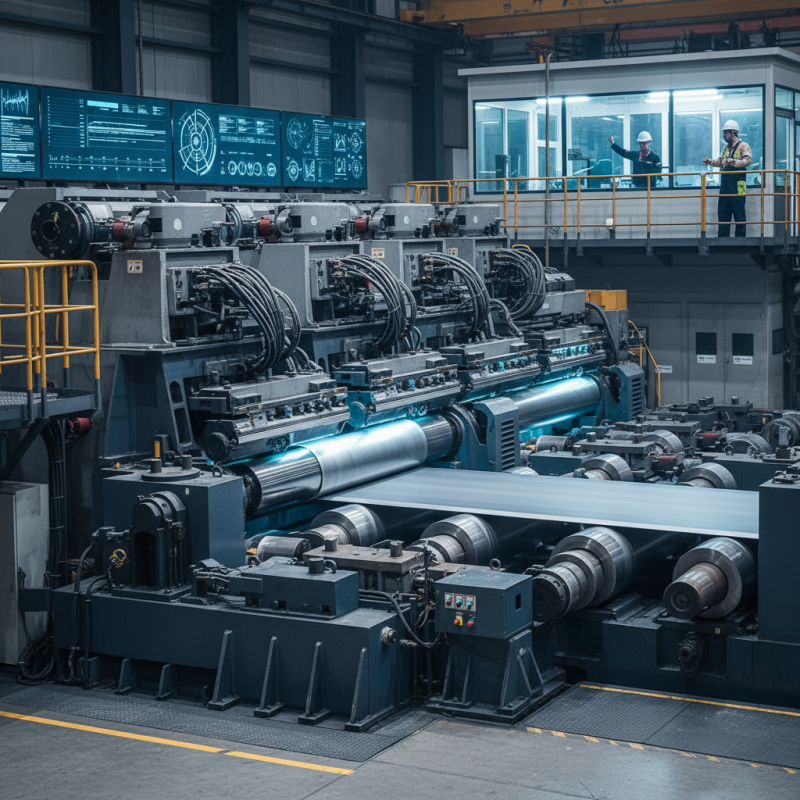
Understanding Tandem Cold Rolling Mill Operation and Its Components
tandem cold rolling mills are essential in producing thin metal sheets. They consist of several stands where metal passes through rollers. Each stand reduces the thickness and enhances the material's properties. The process requires careful control of speed and pressure. If mismanaged, defects can appear, like uneven thickness or surface blemishes.
Understanding the components is crucial. Rollers must be precisely aligned. Misalignment can cause excessive wear. Maintenance is often overlooked. Regular checks on bearings and hydraulic systems help prevent failures. Operators need to monitor temperature as well. Too much heat can distort the metal.
Automation plays a significant role. It aids in controlling parameters efficiently. However, reliance on technology can lead to complacency. Training for human operators should not diminish. Experience brings insight that machines lack. Regular assessments of both equipment and personnel can lead to performance improvements.
Key Performance Indicators to Measure Mill Efficiency in Cold Rolling
In the realm of cold rolling, optimizing mill efficiency is crucial. To achieve this, companies must monitor key performance indicators (KPIs). These KPIs give insight into how well a mill operates. Key metrics include yield, energy consumption, and downtime. Each of these factors directly impacts overall productivity.
Yield is a primary measure. It indicates the amount of quality material produced. If the yield is low, there may be issues in the rolling process. Energy consumption also plays a significant role. High energy usage can signal inefficiencies. By investing in energy-efficient technology, mills can improve this aspect. Downtime is another critical indicator. Unplanned shutdowns significantly reduce output. Tracking this can help identify recurrent issues.
Monitoring these KPIs isn’t always straightforward. Data collection can be inconsistent, leading to gaps in understanding. Employees may overlook some measurements. Regular audits and check-ins are essential. By reflecting on these metrics, teams can implement changes effectively. Balancing these KPIs is an ongoing challenge in the pursuit of higher efficiency in cold rolling mills.
Techniques for Reducing Energy Consumption in Cold Rolling Processes
In cold rolling processes, energy efficiency is crucial. Optimizing energy usage not only reduces costs but also minimizes environmental impact. Techniques to reduce energy consumption can lead to significant improvements.
One effective method is to implement advanced control systems. These systems help manage rolling parameters in real time. An optimized feedback loop can enhance operation based on current conditions. Operators might overlook minor adjustments, which can lead to energy waste. Staying vigilant can yield benefits.
Tips: Monitor the temperature closely. A slight increase can lead to more energy consumption. Regularly inspect machinery for wear and inefficiencies. A worn part can create drag, thus increasing power usage. Train staff on energy-saving practices. They are often the first line of defence in identifying improvements.
Invest in energy-efficient motors. These can reduce energy consumption significantly. Evaluate your existing setup regularly. Always seek areas for improvement, even small changes can make a difference. Don't shy away from trial and error; learning from mistakes is crucial in finding the best practices.
Optimizing Energy Consumption in Tandem Cold Rolling Mill
Quality Control Measures to Enhance Output in Tandem Cold Rolling
Effective quality control measures are essential to enhancing output in a tandem cold rolling mill. One significant approach involves real-time monitoring of process parameters. This includes tracking temperature, pressure, and speed during production. Regular checks can help identify deviations that lead to defects or inefficiencies. It's critical to have skilled operators who can quickly adjust settings based on feedback. However, relying solely on technology without training can create gaps.
Another vital aspect is material inspection. Incoming materials should meet strict standards to prevent issues later. Visual inspections combined with automated systems can help catch errors. Yet, even with these measures, mistakes might slip through. Regular audits of both the production process and the quality control system are necessary to address these shortcomings.
Finally, employee feedback plays a crucial role. Workers often have insights into potential improvements. Encouraging them to report issues can foster a culture of quality. Sometimes, management may overlook practical challenges faced on the shop floor. Engaging with personnel can lead to solutions that enhance overall efficiency while addressing real-world obstacles.
Implementing Advanced Automation for Optimizing Mill Performance
Implementing advanced automation in a tandem cold rolling mill can significantly enhance overall performance. Automation can help monitor various parameters in real-time, allowing for quick adjustments. For instance, measuring strip thickness and width during the rolling process ensures product consistency. Automated systems can react faster than human operators, enabling immediate responses to deviations.
However, integrating automation is not without challenges. Ensuring all components communicate seamlessly can be complex. Sometimes, sensors may fail or provide inaccurate data, leading to production issues. It's critical to conduct regular system checks and updates. Training personnel to manage automated systems is also essential. Employees need to understand how automation affects their roles and responsibilities.
What about maintenance? A fully automated system requires a different maintenance approach. Predictive maintenance can help, but it requires initial investment and expertise. Without proper maintenance, the benefits of automation may not be realized. Balancing technology with human insight is key to navigating these complexities in tandem cold rolling mills.
How to Optimize Tandem Cold Rolling Mill Efficiency? - Implementing Advanced Automation for Optimizing Mill Performance
| Parameter | Value | Unit |
| Production Speed | 400 | m/min |
| Power Consumption | 250 | kWh/t |
| Material Thickness | 0.2 | mm |
| Yield Strength | 300 | MPa |
| Roll Diameter | 600 | mm |
| Operational Downtime | 5 | % of Operation Time |