

Blog

How to Choose the Best Deck Boards?

Choosing the right Deck Boards starts with the conditions beneath your feet. A sunny, open deck faces different stresses from a shaded porch that stays damp after rain. Before comparing colors, consider your climate, budget, maintenance habits, and the framing that will support each board. Those details shape whether wood, composite, or another material is a practical fit.

Look closely at the trade-offs. Pressure-treated wood often costs less upfront, but it needs regular care. Cedar and other naturally attractive woods can feel warm and smooth, yet their color may fade without maintenance. Composite boards resist many common sources of wear, though they can become hot in direct sun and usually cost more initially. Check manufacturer instructions for joist spacing, fastening, ventilation, and cleaning. A sample board in your own light can reveal more than a glossy product photo.

An expert’s judgment can help, but accuracy matters. No source was provided to verify a named professional’s quotation, so I won’t invent one. This guide will instead compare materials, surface textures, board profiles, warranties, installation needs, and long-term costs. It will also flag a common blind spot: the board itself is only part of the system. Drainage, sturdy framing, and careful installation matter too. The best choice is not always the most expensive—or the prettiest sample. It is the one that suits your site and the upkeep you will actually do.
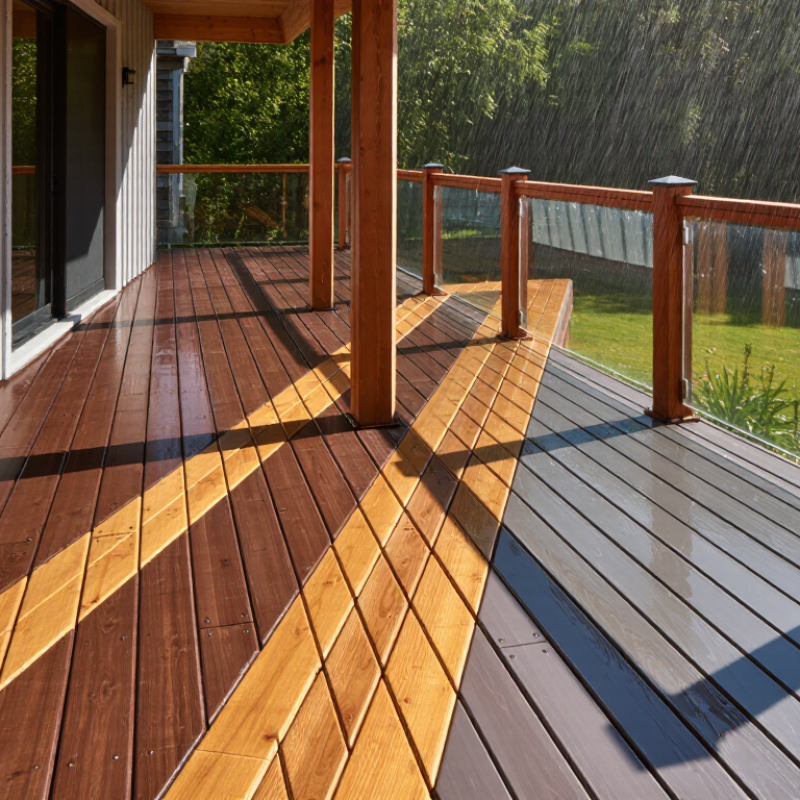
How to Choose the Best Deck Boards?

Identify Your Deck’s Purpose, Location, and Structural Requirements

How to Choose the Best Deck Boards?

Identify Your Deck’s Purpose, Location, and Structural Requirements

Start with how the deck will be used. A quiet sitting area has different demands than a space for dining, a heavy grill, or a hot tub. Measure the planned layout and note where people and heavy items will gather. These details affect joist spacing and support needs, not just board appearance. Hot tubs need particular care. Get a qualified professional to check the structure before choosing boards.

Location matters. A shaded corner that stays damp may need different maintenance than a sunny, exposed deck. Near the coast, salt and moisture can speed up wear on some materials; in snowy areas, plan for snow loads and drainage. The USDA Forest Products Laboratory’s Wood Handbook describes the fiber saturation point of wood as roughly 30% moisture content. Below that level, changing moisture can cause wood to shrink or swell. Leave appropriate gaps, and follow the board maker’s installation guidance. Small details matter.

Check the frame before buying. The American Wood Council’s Prescriptive Residential Wood Deck Construction Guide uses a typical residential design load of 40 pounds per square foot live load, plus 10 pounds per square foot dead load. Actual requirements can vary with local codes and site conditions. Board span limits also depend on material and thickness, so confirm them against the product’s technical data. A wider board may look calmer, but it cannot fix undersized joists. That’s an easy detail to overlook.

Compare Deck Board Materials and Their Key Properties

Pressure-treated wood is often chosen for its lower upfront cost and easy availability. It can, however, check, warp, and need periodic cleaning or sealing. Naturally durable cedar is lighter and often feels cooler underfoot, but it dents more easily than harder species. Consider the climate, shade, and how much maintenance you will actually do.

The USDA Forest Products Laboratory’s Wood Handbook reports western redcedar shrinkage of about 2.4% radially and 5.0% tangentially, from green wood to oven-dry. These laboratory figures show why boards can move as they dry; they are not a prediction of seasonal movement on a specific deck. Leave appropriate gaps, and follow the board maker’s installation guidance. Small details matter.

Wood-plastic composite boards resist many common problems associated with rot and splinters, and usually need no paint. Their surface can become hot in direct sun, while performance varies with formulation and board design. ASTM D7032 evaluates composite decking for structural performance, including flexural properties and creep. Compare test documentation, warranty conditions, and joist spacing before buying. Check the span. Hold a sample in sunlight if possible; color and texture can look different outdoors. Some choices still involve trade-offs.

Assess Durability, Maintenance Needs, and Weather Resistance

How to Choose the Best Deck Boards?

Assess Durability, Maintenance Needs, and Weather Resistance

Deck boards face more than foot traffic. Rain can seep into small cracks, summer sun can fade exposed surfaces, and freeze-thaw cycles may worsen existing splits. Compare materials by their expected service life and suitability for your local climate. Pressure-treated wood often needs periodic sealing and inspection. Composite boards usually need less upkeep, but can still heat up in direct sun and may show scratches. No option is maintenance-free.

Check product specifications for moisture resistance, fade performance, and recommended installation gaps. Boards that drain and dry well are less likely to stay damp after a storm. Also inspect the deck’s shaded corners and the areas near stairs; these spots can remain wet longer. A durable board cannot compensate for poor drainage or an unstable frame. That detail is easy to overlook.

Tips: Ask how often the boards need cleaning or sealing, and follow the care instructions. Keep a small sample outdoors for several days to judge its color and surface temperature. Compare maintenance over time, not just the purchase price. Honestly, weather can be unpredictable, so even a careful choice may need occasional repairs.

Choose Board Dimensions, Surface Texture, and Installation Method

Board dimensions affect both appearance and performance. Wider boards create fewer seams, but they may show more movement as moisture and temperature change. Narrower boards can offer a steadier look across a large deck. Match board thickness and joist spacing to the product’s installation guide; unsupported spans can lead to flexing. Measure the actual frame, not just the plan. Small errors add up.

Surface texture matters underfoot and during cleanup. Deep grooves may improve grip, yet they can hold dirt and damp leaves. Smooth boards are easier to sweep, but can feel slippery when wet. Consider shade, drainage, and how the deck will be used. Installation method also shapes the result: face-fastened screws are visible and accessible, while hidden fasteners create a cleaner surface but require compatible board edges. Follow the specified spacing and leave room for drainage and seasonal movement. I’ve seen attractive layouts become awkward when board widths were chosen before checking the framing. A recheck saves trouble.

Tips: Lay sample boards beside the house and view them in sunlight and shade. Check fastener compatibility before ordering. Measure twice. Then confirm the joist spacing against the installation guide.

Compare Total Costs and Check Safety and Warranty Standards

How to Choose the Best Deck Boards?

Compare the full project cost, not just the price per board. Include framing, fasteners, delivery, installation, and likely maintenance. The 2024 Cost vs. Value Report from Journal of Light Construction estimated an average U.S. wood deck addition at $17,615, compared with $24,206 for a composite deck. These are whole-project estimates, not universal quotes, but they show how material choice can change the budget. A low board price can be misleading. I’ve seen estimates overlook disposal or stair details; those omissions can sting later.

Check that the product’s performance information suits your planned spans and installation. ASTM D7032 covers performance evaluation for wood-plastic composite decking and guardrail systems. Ask for the relevant test documentation, load guidance, and approved fastening details. Read warranty terms closely: coverage may differ for fading, staining, labor, and installation errors. A long warranty is not automatically broad protection. Compare the exclusions.

Tips: Get itemized quotes using the same deck dimensions. Keep a sample outdoors and inspect it when wet. Ask who handles warranty claims, and save receipts and installation records. Then compare expected upkeep over several years, not just the first invoice.

How to Choose the Best Deck Boards? — Compare Total Costs and Check Safety and Warranty Standards
Deck-board type Indicative board-only cost (USD per sq. ft.) Typical service-life range Upkeep and total-cost considerations Safety checks Warranty checks
Pressure-treated softwood $2–$5 About 10–15 years with appropriate installation and maintenance Usually a lower initial board cost. Budget for cleaning, periodic water-repellent or stain treatment, and possible board replacement. Use fasteners rated for the wood-treatment chemistry. Follow the treatment label and local rules when cutting or disposing of scraps; never burn treated wood. Check for splinters, raised fasteners, and decay. Coverage varies by product and seller. Check whether the warranty covers decay, insects, or defects, and note exclusions for installation, ground contact, and maintenance.
Cedar or other naturally durable softwood $4–$8 About 15–20 years; exposure and upkeep can change this substantially Costs more initially than many treated softwoods. Cleaning and periodic sealing or staining can help preserve appearance; untreated boards may weather and change color. Inspect for splinters, loose boards, and slippery algae. Use a board layout and fastening method suited to the wood and local code. Natural weathering and color change may not be covered. Review the stated coverage period, maintenance conditions, and remedy for a valid claim.
Tropical hardwood $8–$15 Often 20–30 years or longer when properly installed and maintained Higher purchase and installation costs are common. Dense boards may need pre-drilling and compatible fasteners; include the cost of suitable tools and any finish you choose. Confirm the species and its installation instructions. Check wet-surface traction, board movement, ventilation, and fastener suitability. Coverage is product- and seller-specific and may be limited. Confirm what proof of species, installation, and maintenance is required.
Wood-plastic composite $5–$13 Often planned for roughly 25–30 years, but actual life depends on product, climate, and installation Higher upfront cost than many basic wood boards, with no routine staining required. Cleaning, compatible clips or fasteners, and replacement of damaged boards still affect lifetime cost. Check wet-use guidance and product-specific traction information. ASTM D7032 covers performance evaluation of wood-plastic composite decking and guardrail systems; it does not replace local building-code requirements. Read the limited warranty for coverage of structural defects, staining, and fading separately. Check exclusions, required installation details, transfer rules, and whether labor is covered.
Cellular PVC decking $8–$15 Often planned for roughly 25–30 years; product and site conditions matter Typically a higher initial board cost and little routine painting or staining. Include the specified fastening system, cleaning, and any temperature-related installation requirements. Check the product’s installation instructions for spacing, support, and temperature. ASTM D6662 is a specification for PVC-based plastic lumber decking boards; confirm the specific product’s documentation and code acceptance. Warranty terms differ by product. Check coverage for cracking, fading, staining, and other defects, plus exclusions for heat exposure, installation, cleaning products, and labor.

Cost and lifespan guide: Price ranges are indicative U.S. retail planning estimates for deck boards only, not a project quote. They exclude framing, labor, demolition, stairs, railing, fasteners, and waste; local prices and board grades vary. Service-life ranges are not guarantees.

Compare total cost: Estimate boards, framing, fasteners, installation, maintenance, and likely repairs over the period you expect to own the deck. A higher initial price may or may not be offset by lower upkeep.

Safety and warranties: Follow local building codes and the specific product’s installation instructions. Wet surfaces, algae, loose boards, and protruding fasteners can create hazards; no material is automatically slip-proof. Treat a warranty as product-specific written coverage, not a guarantee of a particular service life.

Article Source:

wpChatIcon
wpChatIcon