

Blog

How to Choose a Roll Bag Making Machine in 2026?

Choosing a Roll Bag Making Machine in 2026 is not just a matter of comparing advertised speeds. The right choice depends on the bags you plan to produce, the materials you use, and the consistency your customers expect. A machine suited to thin produce bags may not handle thicker refuse-bag film or demanding seal requirements well. Start with real production details: film type and thickness, bag width and length, seal style, and expected daily output. Bring sample material to equipment trials whenever possible. A clean cut and firm seal on a demonstration sample matter more than a promising brochure.

Look closely at changeover time, control settings, operator training, maintenance access, and the availability of replacement parts. Ask suppliers how they verify output claims and what support they provide after installation. Compare the full operating cost, including energy, material waste, labor, and routine servicing—not only the purchase price. Keep applicable workplace and product-safety requirements in view, and confirm machine specifications with the manufacturer before ordering. No specification sheet tells the whole story. A short factory trial can reveal wrinkles, uneven seals, or awkward adjustments that a sales description may leave out. Some trade-offs remain; higher speed may mean more setup demands. This guide outlines practical questions to help buyers assess equipment, compare suppliers, and choose a machine that fits their production needs.
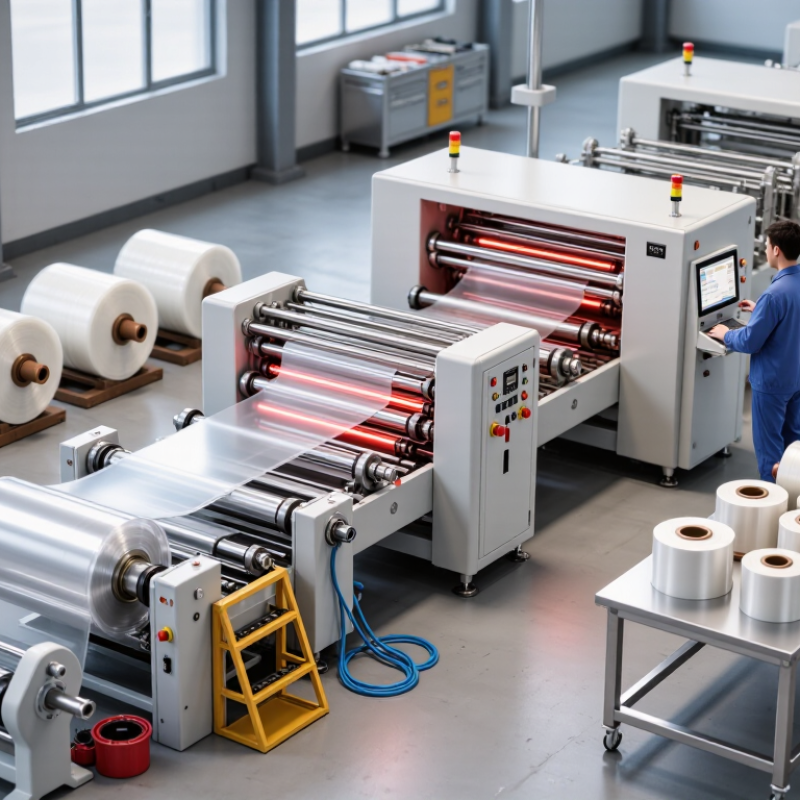
How to Choose a Roll Bag Making Machine in 2026?

Define Your Roll Bag Production Requirements

Before comparing machines, write down the bags you actually sell, not the widest range you might someday make. Record finished width, cut length, gusset depth, and seal style. A 300 mm bag with a side gusset can behave differently from a flat bag on the same line. Keep a few finished samples beside your notes. They reveal details a spreadsheet may miss.

Next, define the material and output. Note film type, thickness range, roll width, and whether printed registration marks must align at the cutter. Estimate good bags per hour during a normal shift, not just the machine’s advertised top speed. Include setup, roll changes, and routine stops. Be specific. If orders range from short runs to full-day batches, ask how long format changes take and which parts need adjustment.

Check the people and space involved, too. Who loads film, clears jams, and inspects seals? Measure floor area, power supply, air requirements, and access for a pallet jack. Set a scrap target based on acceptable defects. One often-overlooked detail is the roll core size; a mismatch can interrupt winding. Leave room for future products, but avoid buying capacity based on guesses. Recent order records may challenge your estimate.

How to Choose a Roll Bag Making Machine in 2026: Define Your Production Requirements

These are illustrative planning targets, not industry benchmarks. Estimate the required output for each bag format from your order volumes and available production hours. Before choosing a machine, also confirm bag width and length, film type and thickness, roll configuration, and the output rate required for your busiest product.

Compare Machine Types and Bag-Forming Methods

How to Choose a Roll Bag Making Machine in 2026?

Compare machine types by the bag structure you need, not by advertised speed alone. A bottom-seal line suits many flat or folded bags made from continuous film. It seals across the web, then cuts or perforates bags for winding. Side-seal machines can fit different formats, but seal strength and edge finish depend on the film and setup. For draw-tape refuse bags, choose equipment designed to form and insert the tape, rather than adapting a basic roll line.

Bag-forming methods shape the machine choice. A simple perforated roll is easy to dispense, while a core-wound roll needs accurate winding tension and consistent roll length. Star-sealed bottoms use folded film and can provide a compact, leak-resistant base for liners. T-shirt-style bags require different sealing and cutting steps. That difference matters. Check the finished bag size, film thickness, seal pattern, and perforation tear before comparing output rates. Ask for a trial using your own film; a neat sample on one material may behave differently on another.

Also compare changeover time, operator access, and waste handling. During a trial, inspect seal lines under light pressure and check whether bags separate cleanly at the perforation. Test real film. A specification sheet can look convincing, yet it rarely shows how often adjustments are needed during a shift. There is no perfect setup; even a well-matched machine may need tuning when film properties change.

Check Material Compatibility, Speed, and Automation

How to Choose a Roll Bag Making Machine in 2026?

Start with the materials you plan to run, not the machine’s headline speed. Polyethylene films can vary in thickness, stiffness, and sealing behavior. Check the machine’s supported film range and confirm it suits your actual roll width and bag dimensions. If you use printed film, ask how the registration system handles repeat length and alignment. A sample run can reveal wrinkles, weak seals, or drifting cuts that a specification sheet may not show.

Speed matters, but only when the machine can maintain consistent seals and dimensions at your normal production rate. Ask for running speed with your intended material, rather than an ideal figure measured under unknown conditions. Review changeover steps, too. Frequent size changes can make a fast machine less productive if adjustments are slow or require repeated trial runs. Automation may reduce manual feeding and counting, but it also adds sensors and settings that operators must understand. More automation is not always simpler.

Tips: Bring film samples and target bag sizes to a machine trial. Record output, rejects, and changeover time. Small details matter. I would still leave room for operator feedback; early estimates can miss awkward adjustments. Test first.

Evaluate Quality Controls, Safety, and After-Sales Support

When choosing a roll bag making machine in 2026, ask for a documented acceptance test using your actual film. Check seal strength, bag dimensions, cutting accuracy, and reject rates across a sustained run. A clean showroom sample proves little. Ask how sensors detect film drift and how operators verify calibration after a changeover. ISO’s 2023 Survey of Certifications reported more than one million valid ISO 9001 certificates worldwide, showing how widely quality management systems are used. Certification alone, however, does not prove a machine will meet your production targets.

Safety deserves a hands-on review. Check whether guards stay closed during operation, emergency stops are easy to reach, and routine cleaning avoids awkward reaches. The U.S. Bureau of Labor Statistics reported a 2.8 recordable injury and illness rate per 100 full-time workers in manufacturing in its 2023 Survey of Occupational Injuries and Illnesses. That figure is not specific to bag machines, but it is a useful reminder to inspect real operator tasks. Small details matter.

After-sales support can determine whether a minor fault becomes a lost shift. Request written response times, spare-parts lead times, troubleshooting documents, and training for maintenance staff. Ask the supplier to demonstrate a common fault recovery. A polished demo can still hide weak support; I would verify service promises with customer references and realistic production scenarios.

Compare Total Costs and Verify the Supplier Before Buying

A roll bag making machine’s purchase price is only the visible cost. Add installation, operator training, tooling, spare parts, energy use, film waste, and changeover time. Ask suppliers for a written estimate covering the first three years, not just delivery. Then compare output using the same film width, thickness, and bag size. A faster quoted speed means little if the line needs frequent adjustment. Small details matter.

The U.S. Department of Energy’s Operations & Maintenance Best Practices guide estimates predictive maintenance can save 8–12% compared with preventive maintenance, and 25–30% compared with reactive maintenance. Use that benchmark cautiously: real savings depend on machine duty and service quality. Before buying, request a factory acceptance test with your material and target bag specifications. Check seal consistency, cutting accuracy, changeover time, and scrap rate. Ask for references from plants running similar film and shifts. Verify response times, technician availability, parts lead times, and warranty exclusions in writing. A polished demonstration is not proof of long-term reliability. I would also inspect the maintenance log and ask who handles a fault after installation. Sometimes the answer is vague. That matters. Keep the test results and service promises in the purchase file, even if the supplier seems trustworthy.

How to Choose a Roll Bag Making Machine in 2026? — Compare Total Costs and Verify the Supplier Before Buying
Comparison Item Entry-Level Single-Lane Converter Mid-Range Servo-Controlled Converter High-Output Converter with Inline Printing What to Confirm with the Supplier
Typical configuration Single-lane converting, sealing, perforating, and roll winding; suited to simpler bag specifications. Servo-controlled feeding and cutting, with options for multiple lanes or more automated roll handling. Higher-capacity converting line with inline printing; configuration depends on film, bag design, and print requirements. Request a written specification listing supported bag styles, film types, widths, thicknesses, and roll formats.
Indicative machine purchase price (USD) $25,000–$60,000 $60,000–$150,000 $150,000–$350,000 Compare equivalent scope: included unwinders, winders, printing units, controls, tooling, and commissioning.
Installation and commissioning allowance (USD) $1,250–$6,000 $3,000–$15,000 $7,500–$35,000 Ask whether installation, operator training, travel, and production acceptance testing are included or charged separately.
Initial tooling and setup allowance (USD) $3,000–$10,000 $5,000–$20,000 $10,000–$40,000 List each required sealing blade, perforation tool, core size, print component, and format change part with its price.
Planning power range 8–12 kW 12–20 kW 18–30 kW Verify connected load, voltage, phase, compressed-air needs, and actual operating consumption for the quoted configuration.
Illustrative annual electricity cost $1,920–$2,880 $2,880–$4,800 $4,320–$7,200 Illustration only: estimated power × 2,000 operating hours/year × $0.12/kWh. Substitute your local tariff and measured load.
Annual maintenance planning allowance 2%–5% of machine purchase price: approximately $500–$3,000/year. 2%–5% of machine purchase price: approximately $1,200–$7,500/year. 2%–5% of machine purchase price: approximately $3,000–$17,500/year. Request a recommended spare-parts list, maintenance schedule, warranty terms, and prices for wear parts and service visits.
Illustrative 5-year ownership cost (USD) $41,000–$105,000 $88,000–$247,000 $204,000–$549,000 Planning estimate: purchase price + installation + initial tooling + 5 years of estimated electricity and maintenance allowances.
Supplier and machine verification Request a live run using your film and bag specification; inspect sealing, perforation, winding, and finished-roll consistency. Request a run at the quoted settings and confirm changeover steps, control functions, and demonstrated output for your product. Test the complete line, including print registration and converting; confirm line integration and reject handling. Verify the legal seller, machine serial number, references, service coverage, delivery terms, acceptance criteria, and payment milestones independently.
Estimate scope Budgetary comparisons only; prices vary with specifications, options, origin, and order terms. Figures are not supplier quotations. Five-year figures exclude film and other production materials, labor, freight, duties, taxes, financing, building work, downtime, and resale value. Obtain itemized written quotations before comparing.
wpChatIcon
wpChatIcon