What is a Desktop Dental Metal 3D Printer and How Does It Work?
The advancement of dental technology has ushered in the era of the desktop dental metal 3d printer. According to a recent market report, the dental 3D printing market is expected to grow substantially, reaching a valuation of approximately $6 billion by 2025. This growth reflects the increasing adoption of 3D printing in dental practices, enhancing customization and efficiency.
Desktop dental metal 3D printers allow dental professionals to produce complex dental implants and prosthetics with high precision. These devices utilize metal materials to create durable and biocompatible dental solutions. However, the technology is not without challenges. The initial investment can be considerable, and the learning curve is steep. Dental practitioners must navigate these obstacles while integrating 3D printing into their workflow.
Industry reports indicate that many dental labs are still hesitant to transition fully to 3D printing. This reluctance may stem from concerns about quality control or lack of trained staff. As the market evolves, addressing these concerns will be vital for the widespread adoption of desktop dental metal 3D printers. It prompts a necessary reflection on the balance between traditional practices and innovative technologies in dentistry.
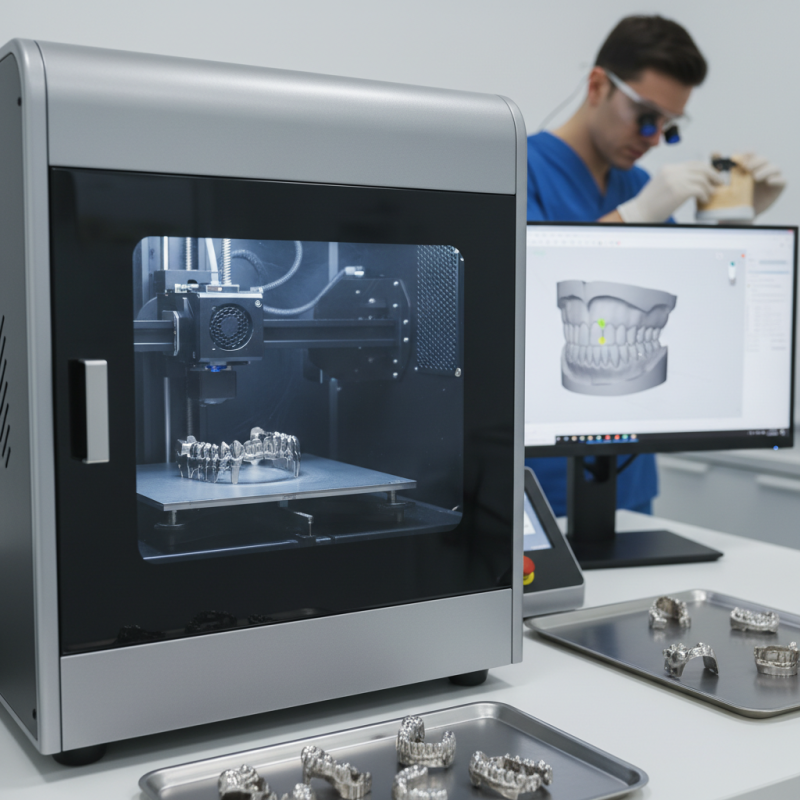
What is a Desktop Dental Metal 3D Printer?
A desktop dental metal 3D printer is an innovative technology designed for dental professionals. It allows for the creation of dental prosthetics, implants, and surgical guides directly from digital models. This technology employs a process known as metal additive manufacturing. In this method, metal powders are fused layer by layer using a laser source, resulting in highly accurate dental products.
According to a report by MarketsandMarkets, the dental 3D printing market is expected to reach $4.07 billion by 2027. This growth indicates a strong demand for precise and customized dental solutions. The rise in implant procedures and the need for personalized dental care are driving this trend. Though this technology holds great promise, it’s essential to recognize potential drawbacks. A study published in the Journal of Dentistry highlights the challenges in metal powder handling and the complexity of post-processing steps.
While desktop dental metal 3D printers offer significant advantages, such as reduced production time and cost efficiency, they are not without flaws. The learning curve can be steep, requiring specialized training. Ensuring quality control during the printing process is crucial, as variations can lead to less reliable outcomes. These factors underline the importance of ongoing research and development in this area to fully realize its potential.
Key Components of Desktop Dental Metal 3D Printers
Desktop dental metal 3D printers are gaining traction in the dental industry. These printers specialize in creating precise dental fixtures, such as crowns and bridges. Understanding their key components helps in appreciating how they function and the benefits they offer.
The heart of these printers lies in their high-powered lasers. These lasers melt metal powder, layer by layer, to create detailed dental products. Another critical component is the metal powder itself, often made from materials like Titanium or Cobalt-Chromium. The quality of the powder directly influences the final product.
Additionally, a sophisticated cooling system is essential to solidify each layer quickly and maintain accuracy. User experience can vary greatly. Some operators find the setup process complex. Practicing and mastering the software is key to achieving optimal results. Regular maintenance of the printer is necessary.
Issues can arise, such as uneven powder distribution or laser misalignment. These nuances highlight the ongoing learning and adaptation required in this technology. Overall, desktop dental metal 3D printers present exciting opportunities but also demand a commitment to continuous improvement.
How Desktop Dental Metal 3D Printers Operate
Desktop dental metal 3D printers have gained attention for their precision and efficiency. These printers use a process called metal additive manufacturing. They create dental implants, crowns, and bridges using metal powders. The printer layers the metal powder, binding it with lasers or other energy sources. This method allows for intricate designs that traditional machining may not achieve.
Operating a desktop dental metal 3D printer is a careful balance of technology and art. The first step involves preparing a digital model using CAD software. A skilled technician needs to ensure that the model is accurate and meets specifications. Once loaded into the printer, the machine begins the layering process. Each layer requires meticulous attention to detail to ensure proper adhesion.
Post-processing is a crucial stage that cannot be overlooked. After printing, the parts usually need cleaning and sintering. This can introduce challenges, as improper handling may lead to defects. Understanding these intricacies is vital. The learning curve can be steep, but the rewards are significant. Proper training and experience are essential for mastering the process.
Advantages of Using Desktop Dental Metal 3D Printers in Dentistry
Desktop dental metal 3D printers are transforming dentistry. They enable precise creation of dental implants, crowns, and bridges. These printers save time, ensuring quicker turnaround for dental practices, which improves patient satisfaction. Accuracy is critical in dentistry, and these printers offer consistent results.
Using desktop dental metal 3D printers has distinct advantages. First, they streamline the production process. Dentists can print custom dental solutions in-house, reducing the need for external laboratories. This leads to more control over quality and timing. Furthermore, the level of customization is remarkable. Each print can be tailored to fit individual patient needs, enhancing comfort and effectiveness.
Tips: When considering a desktop dental metal 3D printer, evaluate your practice's workflow. Assess how it can integrate into your existing processes. Also, training staff on this technology is essential. Skilled operators ensure high-quality results. Take time to reflect on potential challenges, such as initial costs and maintenance. These considerations are vital for a successful implementation in your dental practice.
Advantages of Desktop Dental Metal 3D Printers in Dentistry
Applications of Desktop Dental Metal 3D Printing in Dental Practices
Desktop dental metal 3D printing is revolutionizing dental practices. This technology offers precise and customizable solutions. According to a report by Allied Market Research, the dental 3D printing market is projected to reach $6 billion by 2025. This growth is fueled by the increasing demand for personalized dental solutions.
In dental practices, metal 3D printing is often used for producing dental prosthetics, crowns, and bridges. This method allows for greater accuracy compared to traditional techniques. For instance, studies show that metal 3D printers can achieve a tolerance of up to 50 microns. However, not all practices have adopted this technology due to its initial costs and the learning curve required.
A survey conducted by Dental Economics revealed that only 22% of dental practices currently use 3D printing. Many practitioners express concerns about the time-consuming setup and post-processing phases. The technology also requires stringent quality controls to ensure safety and efficacy. These challenges highlight the need for ongoing education and training within the industry as practices seek to integrate this innovative method.
What is a Desktop Dental Metal 3D Printer and How Does It Work? - Applications of Desktop Dental Metal 3D Printing in Dental Practices
| Application | Description | Benefits | Materials Used |
| Dental Crowns | 3D printing of custom crowns using metal powders. | High precision, reduced production time. | Titanium, Gold Alloy, Cobalt-Chromium. |
| Dental Implants | Production of rigid and customized dental implants. | Improved fit and integration with bone. | Titanium, Zirconium. |
| Orthodontic Appliances | Custom brackets and aligners tailored to patients. | Customization for better comfort and effectiveness. | Cobalt-Chromium, Stainless Steel. |
| Surgical Guides | Guides for accurate positioning during surgeries. | Increased accuracy and reduced surgical time. | Titanium, PEEK. |
| Temporary Restorations | Quick creation of temporary crowns or bridges. | Rapid production and better patient satisfaction. | Resin-based materials with metal support. |