What is Desizing Enzyme and How Does It Work in Textile Industry?
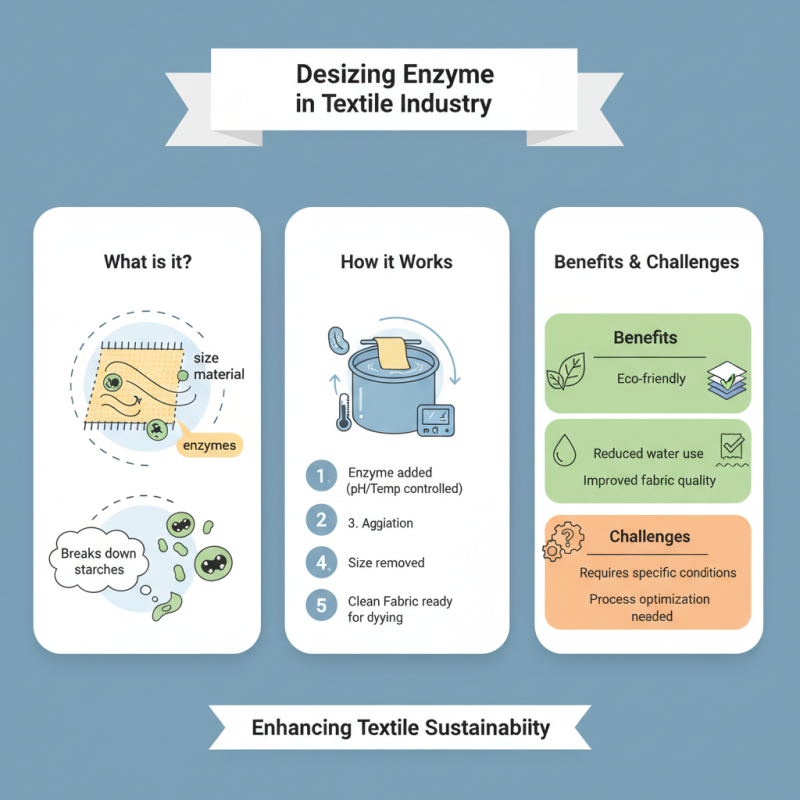
Desizing is a critical process in the textile industry. It involves removing size materials from woven fabrics before dyeing or finishing. One essential component in this process is the desizing enzyme. These enzymes specifically target and break down starches and other sizing agents. This not only enhances fabric quality but also promotes eco-friendliness.
desizing enzymes are efficient and less harmful than traditional chemical methods. They help achieve cleaner fabrics and reduce environmental impact. However, not all desizing enzymes perform equally. Some may require specific conditions to work optimally, leading to variable outcomes. It raises questions about their reliability in different settings.
While the use of desizing enzymes is beneficial, challenges remain. Factors such as pH levels and temperature can affect their efficiency. Users must understand these variables for best results. This reflection on the enzyme's role prompts further investigation into improving desizing processes. Enhancements can lead to better performance and sustainability in the textile industry.
What is Desizing in the Textile Industry?
Desizing is a critical step in the textile industry. It removes excess sizing agents from fabric. These agents are used during the weaving process to enhance the fabric's strength. However, they must be eliminated before dyeing or finishing. This ensures proper absorption of dyes and chemicals. Without desizing, fabric quality may suffer.
In practice, desizing can be challenging. Enzymes are commonly used for this purpose. They break down starches present in the fabric. This process is effective and eco-friendly. However, not all enzymes work equally well with every type of fabric. Different fibers may require specific enzymes, which adds complexity to the process.
Textile manufacturers must carefully consider their desizing methods. Factors such as temperature and pH can affect enzyme activity. Failure to optimize these conditions can lead to incomplete desizing. This may result in poor dye uptake and uneven finishes. Manufacturers often need to revisit their strategies for optimal results. Adjusting enzyme concentrations and application times can significantly improve the outcome.
Understanding the Role of Enzymes in Desizing
Enzymes play a critical role in the desizing process within the textile industry. Desizing involves removing starch and other substances used during weaving. Starch can create issues during dyeing and finishing. Enzymes like amylases are perfect for this job. They break down starch into simpler sugars, making it easier to wash away.
The use of enzymes in desizing offers several benefits. They are environmentally friendly compared to traditional chemical methods. Additionally, they can be more efficient and reduce water usage. However, there are challenges to consider. The effectiveness of enzymes can be influenced by temperature and pH levels. Sometimes, these factors make enzymes less active than desired.
Improving desizing processes with enzymes requires constant innovation. Different fabrics and starch types affect enzyme performance. This variability often leads to unexpected outcomes. Textile manufacturers must adapt and test new formulations. Continuous experimentation is essential in achieving optimal results.
Types of Desizing Enzymes Used in Textiles
Desizing enzymes play a crucial role in the textile industry. These enzymes help remove size agents from woven fabrics before dyeing and finishing processes. Different types of desizing enzymes are utilized to meet various fabric requirements.
Alpha-amylase is a common desizing enzyme used for starch-based sizes. It effectively breaks down starch into simpler sugars. This action prepares the fabric for subsequent treatments, promoting better dye absorption. In contrast, cellulase enzymes target cellulose-based sizes. They work by hydrolyzing cellulose chains, allowing for easier removal and improving the fabric's softness.
Pectinase is another enzyme often overlooked but vital for fabrics with pectic sizes. It degrades pectin, a substance found in many natural fibers. Not all fabrics react the same way to these enzymes, leading to inconsistent outcomes. Sometimes, over-treatment can weaken the fibers, resulting in damage. Awareness of enzyme effectiveness and conditions is crucial for achieving the desired results in fabric preparation.
The Mechanism of Action of Desizing Enzymes
Desizing enzymes play a crucial role in the textile industry, helping to remove size agents from fabrics. These agents are often starch-based and coat fibers to enhance weaving. After the weaving process, it’s essential to remove these coatings to prepare the fabric for subsequent processes. Desizing enzymes are designed to target and break down these starch residues effectively.
The mechanism of action of desizing enzymes centers on their ability to hydrolyze starch molecules. When applied to the fabric, these enzymes react with the starch, converting it into simpler sugars. This hydrolysis renders the size easily wash-out without damaging the fibers. However, the effectiveness can vary depending on the type of fabric and conditions like temperature and pH. Inconsistent results may arise if enzyme activity is not optimized.
Moreover, some residual starch can remain, which may affect dye uptake during later stages. This leftover can cause uneven color on final products. Manufacturers need to closely monitor enzyme application to ensure optimal performance, as oversaturation can lead to waste and increased costs. Identifying the right balance is essential to achieve desired outcomes in textile processing.
Benefits of Using Desizing Enzymes in Textile Processing
Desizing enzymes play a crucial role in the textile industry. They help remove sizing materials like starch from fabric. This process enhances the quality of the final product. Reports suggest that using enzymes can improve water and energy efficiency by up to 30%. This is a significant saving for manufacturers.
One key benefit of desizing enzymes is their eco-friendliness. Unlike traditional desizing methods, enzymes require milder conditions. They often operate at lower temperatures and pH levels. This translates to less energy consumption. The production of wastewater is also reduced. Less chemical use means less environmental impact.
Tips: Always monitor enzyme activity closely. Overuse can lead to fabric damage. Testing different enzyme types can yield better results. Keep in mind that enzymes might require specific conditions to perform effectively. Regular evaluation of your processes helps optimize the desizing stage. Balancing efficiency and sustainability is vital.
Benefits of Using Desizing Enzymes in Textile Processing