How to Choose the Right Spider Coupling for Your Needs?
Choosing the right spider coupling can significantly impact the efficiency of your machinery. According to a report by the Mechanical Power Transmission Association, improper coupling selection can lead to a 15% decrease in overall performance. This statistic highlights the importance of understanding specific requirements in your applications.
Industry expert Dr. Emily Carter states, "spider couplings must fit both speed and load specifications to achieve optimal results." Her insights reflect a common challenge faced by engineers and managers. Many overlook factors such as shaft misalignment, vibration dampening, and torque transmission. These elements are crucial to ensure your spider coupling performs effectively.
Understanding your operational environment is essential. Various industries, from manufacturing to renewable energy, depend heavily on these couplings. Each application presents unique challenges that require careful consideration. Often, people choose a coupling without fully assessing their needs. This approach can be costly and may lead to inefficiencies. A more thoughtful selection process may uncover better solutions.
Understanding Spider Couplings and Their Functionality
Choosing the right spider coupling can greatly influence machinery performance. These components connect shafts while absorbing vibrations and misalignment. Understanding their functionality is essential to make the best choice for your application.
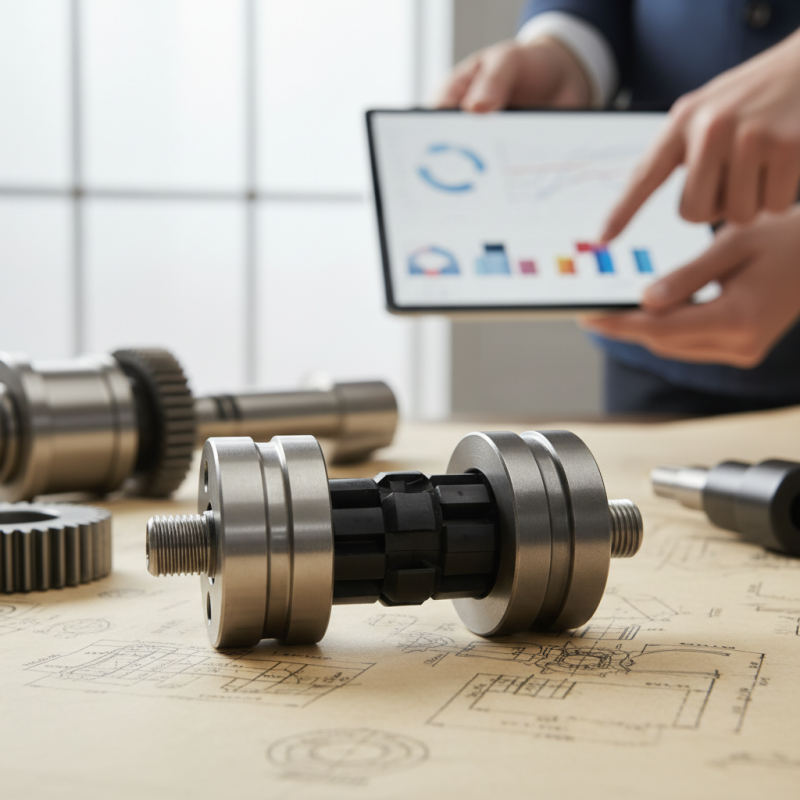
Spider couplings consist of two hubs and an elastomeric spider. The elastomer absorbs shocks. This helps protect equipment from wear. You might find that not all couplings fit all machines. Compatibility with speed and load is crucial.
**Tip:** Always check the torque rating of your spider coupling. Using a coupling with insufficient torque can lead to failures. An overlooked detail could result in costly downtime.
Another point to consider is the environment. High temperatures or harsh chemicals can affect your coupling's lifespan. Evaluate both operational and environmental conditions before deciding.
**Tip:** Regularly inspect your spider couplings. Early detection of wear can prevent sudden breakdowns. A proactive approach to maintenance can extend your machinery's service life.
Identifying Your Specific Torque and Load Requirements
Choosing the right spider coupling starts with understanding your torque and load requirements. Think about the specific application. For example, low-torque applications need a different approach than high-torque systems. You should calculate the maximum torque your system will experience. This can prevent coupling failures later on.
Tips: Always round up your torque estimates. A small increase in power can significantly impact performance. Don't underestimate the load fluctuations in your system. Sometimes, the load might spike unexpectedly.
Consider your environment as well. If you work in a high-temperature area, ensure the coupling can handle it. Also, pay attention to vibration levels. Excessive vibration can lead to wear. A coupling that cannot absorb these shocks could fail. Try to find a balance between durability and flexibility. This is often overlooked but crucial for long-term efficiency.
Tips: Look for materials that offer good resilience. Testing your setup with different couplings can help identify the best choice. A little trial and error might be necessary. Sometimes, what looks good on paper doesn’t perform well in practice.
Evaluating Material Types and Their Impacts on Performance
Choosing the right spider coupling often hinges on the material used. Different materials bring unique benefits and drawbacks that significantly impact performance. For instance, rubber is widely recognized for its excellent vibration dampening. It’s great for reducing operational noise and minimizing wear on connected components. However, rubber may degrade faster under extreme temperatures or harsh chemical conditions.
On the other hand, metallic couplings offer higher strength and durability. They can handle heavy loads and extreme torque. But, they can transmit more vibrations, which might lead to increased wear in machinery. Recent studies indicate that up to 30% of machine failures can be attributed to improper coupling selections. This highlights the importance of assessing your specific operational needs before making a decision.
Another aspect to consider is the environment in which the coupling will operate. Humidity, temperature fluctuations, and potential exposure to corrosive substances all play a vital role. For example, in corrosive environments, stainless steel couplings perform better than standard steel. Each material has its characteristics. Understanding these differences is critical for optimizing performance and extending the life of your equipment.
Considering Environmental Factors and Operating Conditions
When selecting a spider coupling, it's crucial to factor in the operating conditions and environmental elements. Many surveys highlight that nearly 60% of mechanical failures occur due to inadequate consideration of these factors. A coupling used in harsh environments needs to withstand temperature fluctuations, moisture, and dust. If the application is in a wet or corrosive atmosphere, materials that resist corrosion and wear are essential.
Temperature plays a crucial role. For example, at temperatures exceeding 70°C, the flexibility of certain coupling materials may decline. This can lead to vibration issues. Research from industry experts shows that improper material choice in extreme conditions can reduce lifespan by up to 30%. This reduction is significant for operations relying on continuous function.
Another aspect is the degree of misalignment. Many couplings can handle minor misalignment well, but as conditions worsen, this ability diminishes. A gap of just a few millimeters can impact performance drastically. Operators must assess real-life conditions accurately. Regular inspection and monitoring can help detect these variations and prevent costly breakdowns. Ultimately, understanding these elements is vital in making the right choice, and yet many overlook them.
Comparing Different Brands and Models for Optimal Choice
When selecting a spider coupling, it's crucial to compare different models. Not every coupling fits all applications. Each brand has its unique features, making choices complex. Some couplings excel in flexibility, while others offer better torque transmission. This variance can significantly impact performance.
Look closely at materials. Some couplings are made from elastomers. Others may utilize metal composites. The choice of material affects durability and efficiency. Some options wear out quicker under stress. Understanding this is vital. You might think a more expensive model is the best, but that’s not always true.
Consider power ratings and misalignment capabilities. A coupling might handle specific misalignment, but not all do. Testing under real conditions can reveal flaws. Every setup is unique. What works for one application might fail in another. It’s worth diving into comparisons and reflections, though the process can be tedious.
How to Choose the Right Spider Coupling for Your Needs?
| Coupling Type | Material | Torque Capacity (Nm) | Max RPM | Weight (kg) |
| Standard Spider Coupling | Aluminum | 150 | 6000 | 1.2 |
| High Torque Spider Coupling | Steel | 300 | 5000 | 2.5 |
| Flexible Spider Coupling | Nylon | 100 | 7000 | 0.8 |
| Heavy Duty Spider Coupling | Cast Iron | 400 | 4000 | 3.0 |
| Lightweight Spider Coupling | Plastic | 75 | 8000 | 0.5 |