How to Choose the Best Shrink Film for Your Business in 2026
Choosing the right Shrink Film in 2026 is a business decision, not just a packaging choice. The film must protect your product, run smoothly on your equipment, and suit the way customers handle it. A tight, clear wrap can make a bottle multipack look polished. The wrong gauge, however, may wrinkle, tear, or waste material at the sealing station.
Packaging researcher Dr. Susan Selke is a relevant expert on packaging materials, but I can’t verify a direct quotation from her about selecting shrink film. Rather than invent one, this guide follows a practical principle: “Match the film to the product, the process, and the performance you need.” Treat it as an editorial guide, not a quote from Dr. Selke. That distinction matters. Good decisions rely on measurable details, not impressive-sounding claims.
This guide will compare common film types, thicknesses, shrink behavior, clarity, and equipment compatibility. It will also help you weigh storage conditions, package shape, production speed, and material use. Check the actual product specifications, then test the film on your line. Watch the seal. Inspect the corners. Note whether labels remain readable after shrinking. Real results can be messier than a supplier chart suggests. That is worth admitting. A small trial may reveal a problem that a neat spreadsheet misses.
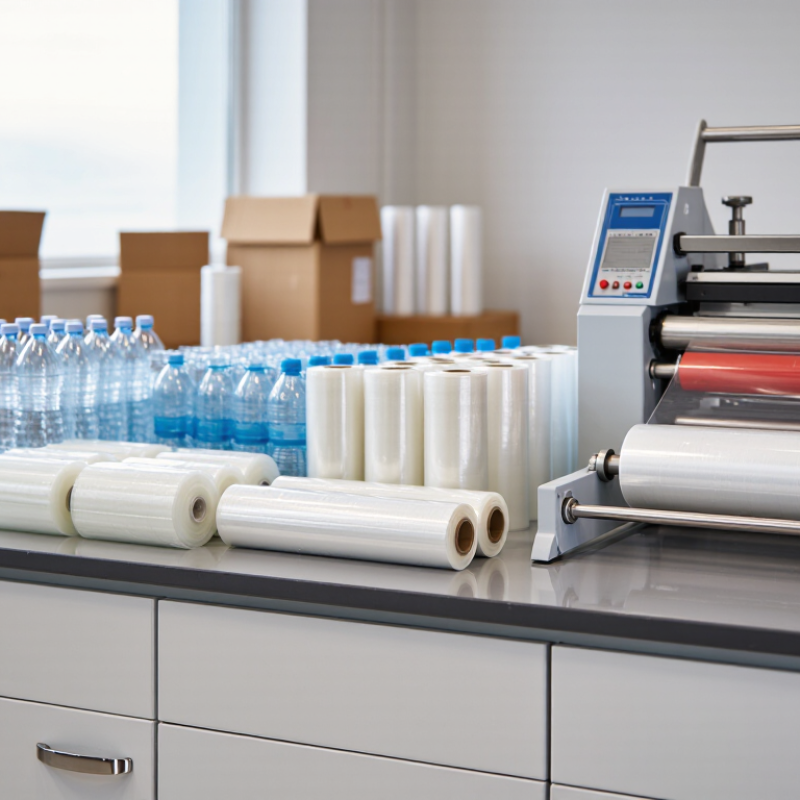
Understand Shrink Film Types, Materials, and How They Work
Shrink film works through orientation and heat. During manufacture, polymer molecules are stretched; in a heat tunnel, they relax and pull the film snug around a product. Polyethylene (PE) is common for bundles and heavier loads because it offers flexibility and impact resistance. Polyolefin film is often clearer and softer, making it useful for retail packs and mixed product shapes. PVC can shrink tightly at lower temperatures, but its handling and disposal needs deserve careful review.
Material matters. PlasticsEurope’s 2024 Plastics—The Fast Facts report estimates global plastics production reached 413.8 million tonnes in 2023. That figure covers many uses, not shrink film alone, but it shows why choosing the right gauge and resin is consequential. A thick film can waste material; a thin one may split at sharp corners. Test actual products on your line, checking seal strength, tunnel temperature, and package appearance. Watch the edges. A clear sample on a desk may behave differently around a cold bottle or a rough carton. There is no perfect film for every load, and our first choice may need revisiting after real production runs.
How to Choose the Best Shrink Film for Your Business in 2026
Typical density ranges for representative shrink-film polymers (g/cm³). These are resin-level ranges; specific film formulations may differ.
How shrink film works: During manufacture, the film is stretched and oriented. When heated, it contracts around a product. Select a film based on the product, package shape, required strength and clarity, sealing method, and equipment—not density alone.
Selection note: PVC, polyethylene (including LDPE), and polypropylene are different material options. Polyolefin shrink film is often made from blends, so it does not have one universal density range. Confirm film specifications and equipment compatibility with your supplier.
Define Your Product, Packaging Needs, and Operating Conditions
Choosing shrink film starts with the product, not the film chart. Fit comes first. Measure the item’s longest and shortest dimensions, then check its weight, corners, surface sensitivity, and exposure to moisture or cold. A rigid box with sharp edges may need different puncture resistance than a smooth bundle. Polyolefin, polyethylene, and PVC behave differently in strength, clarity, shrink response, and sealing; verify each against the package and machine.
The Flexible Packaging Association reported U.S. flexible-packaging sales of $42.9 billion in 2022 in its State of the Flexible Packaging Industry report. That figure describes a broad category, not shrink film alone. It does show why small changes in film gauge and scrap rates can matter at production scale. The U.S. EPA’s 2018 materials report found packaging accounted for 28.1% of municipal solid waste by weight. Check local recovery options before making recyclability claims; collection systems differ.
Then match the film to operating conditions. Record tunnel temperature, conveyor speed, seal quality, and room temperature during a real production run. Test full and partly filled packs, especially after storage or transport. Test it live. A film that looks clear on a sample may wrinkle at line speed or tear around a sharp corner. I would not trust a single successful run; repeat trials across shifts, and document the settings that worked.
Compare Film Performance, Compatibility, and Sustainability
Choosing shrink film starts with the package, not the roll. Match film type and gauge to product weight, sharp edges, and the shrink tunnel’s temperature and speed. Then test. A tight, clear pack on a sample line may wrinkle or split during a faster production run. Check seal strength, puncture resistance, shrink consistency, and product sensitivity to heat. A lab result can still miss a damp carton or a rushed shift change.
Compatibility matters just as much as appearance. Polyolefin, polyethylene, and PVC films behave differently in sealing and shrinking equipment; confirm the machine settings and supplier data before changing materials. For sustainability, compare material weight, recycled content, and local recovery options. A thinner film can reduce material use, but only if it still protects the product and avoids extra damage. The OECD’s 2022 Global Plastics Outlook reports that only 9% of plastic waste was recycled worldwide in 2019; this figure covers plastics broadly, not shrink film specifically. Don’t assume a film is recyclable everywhere. Ask local recovery facilities what they accept, then run a production trial and record waste, seal failures, and pack quality.
Assess Costs, Equipment Requirements, and Supplier Capabilities
Choosing shrink film in 2026 means comparing the cost per finished pack, not just the price per roll. Include film usage, scrap, freight, storage, and downtime in your estimate. A cheaper film may stretch the budget if it causes weak seals or uneven shrinking. Small trial runs help reveal these problems before a full production change. Not glamorous, but useful.
Check the film against your sealing equipment and shrink tunnel. Jaw width, line speed, temperature range, and package shape can all affect results. Record seal strength and package appearance during trials. Watch for wrinkling around corners or loose film after cooling. A neat spreadsheet can still miss how operators handle the material on a busy shift. That deserves a closer look.
Ask suppliers for clear specifications, consistent lot quality, sample rolls, and realistic lead times. Find out whether they can help troubleshoot sealing or tunnel settings when results vary. Request written details on thickness, roll dimensions, and expected tolerances. A fast reply is helpful; a precise answer is better. Supplier capacity matters too, especially when seasonal demand rises. Test communication before relying on it.
How to Choose the Best Shrink Film for Your Business in 2026 - Assess Costs, Equipment Requirements, and Supplier Capabilities
Cost note: Relative cost is a general comparison, not a market quotation. Actual prices vary by resin markets, film gauge, order volume, print or performance requirements, freight, and region. Request comparable quotes using the same film dimensions and annual usage assumptions.
Supplier evaluation checklist
Test Candidate Films and Confirm the Best Fit for Your Business
A film that looks clear on a sample roll may behave differently on your production line. Test candidate films using the actual product, pack arrangement, and sealing equipment. Record film thickness, seal quality, shrink temperature, and line speed. A simple test log makes comparisons more reliable than memory.
Watch each pack as it leaves the tunnel. Look for loose corners, cloudy areas, wrinkles, weak seals, and product movement. Check whether the film tears when handled and whether labels remain readable. Use several samples, not just one. One clean pack proves little. A first trial can also be misleading if the tunnel has not stabilized or the line is running unusually slowly. Note those conditions and repeat the test.
Then test packs after cooling and after routine handling or transport simulation. Compare material use, rejected packs, and any changes needed to your settings. Ask operators whether threading or sealing becomes harder during a full shift; small delays can add up. Keep the results, even when they are untidy. If one candidate performs well only within a narrow temperature range, that limitation matters. Confirm the best fit against your product mix and normal operating conditions before changing purchasing specifications.