

Blog

How to Choose the Best Automotive Security Window Film?

Automotive Security Window Film is designed to help hold broken glass together after an impact. It does not make a window unbreakable. That distinction matters when comparing products. A useful choice depends on more than thickness or a bold security claim. Consider the film’s construction, adhesive, optical clarity, and documented performance. Ask how it behaves when installed on the specific glass in your vehicle.

It is tempting to assume thicker always means safer. That is too simple. A poorly matched film or careless installation can affect visibility, create edge gaps, or weaken the result. Look for clear product specifications and a written warranty. Ask an experienced installer which film suits your vehicle’s windows and how the edges will be finished. A careful answer should explain both benefits and limits.

Think about daily use, too. Will the film make nighttime driving harder? Does it create noticeable haze when sunlight catches the glass? Can the installer show examples of similar vehicles and explain their process? These details are more useful than dramatic promises. Not every claim is equally clear. Compare evidence, not slogans, and check that the chosen product is suitable for your vehicle. This guide outlines the practical factors that help you make an informed decision, while keeping expectations realistic: security film may help retain shattered glass, but it cannot guarantee that a window will resist every break-in attempt or impact.
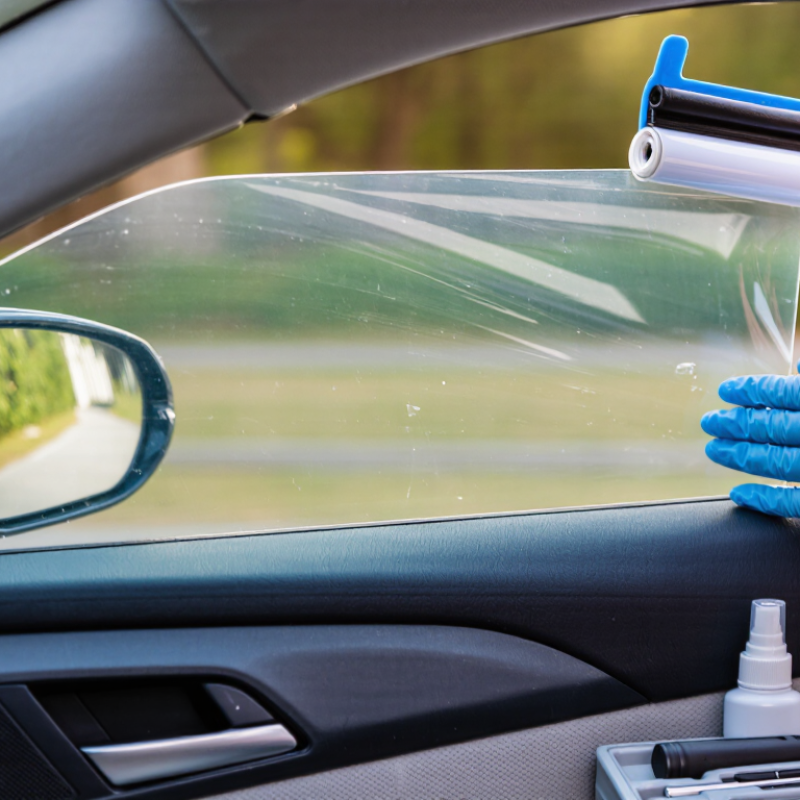
How to Choose the Best Automotive Security Window Film?

Define the Threat: Break-In Delay, Glass Retention, or Both

Start by defining what you need the film to do. Break-in delay means making a window harder to breach quickly. Glass retention means helping broken pieces stay together rather than scattering across a seat. Both goals can matter. They are not identical. Every second can matter. Film may slow access, but it does not make automotive glass unbreakable or guarantee that entry will be prevented.

For retention, ask how the film is secured at the glass edges. The film itself and its installation both affect performance; a strong sheet with poor edge attachment may not hold as intended. A thicker film is not automatically the better choice. Have an experienced installer check your vehicle’s glass, window mechanisms, and trim before recommending a system. Ask what the film is tested to do, and what it is not designed to do. I would not treat a product label as proof. Vehicle glass and installation details vary, so request clear, specific expectations rather than a promise of complete protection.

Compare Common 4–8 Mil Films; Thickness Alone Does Not Rate Security

How to Choose the Best Automotive Security Window Film?

Compare Common 4–8 Mil Films; Thickness Alone Does Not Rate Security

A 4-mil film is not automatically weak, and an 8-mil film is not automatically secure. Thickness describes one part of the material, not how the finished system behaves when glass breaks. Film composition, adhesive strength, glass type, and installation all matter. Ask for test information that matches the film’s intended use, rather than relying on a mil number alone.

Consider what happens at the edges. A well-bonded film may help hold broken glass together, reducing loose fragments inside the vehicle. But many automotive windows are tempered, while windshields are typically laminated; their breakage patterns differ. Film cannot make every window unbreakable or guarantee that it will stay in place under every impact. Not a force field.

Choose a film based on the vehicle’s glass and the kind of protection you actually need. Have an experienced installer explain how the adhesive cures, whether edge coverage is suitable, and what care the film needs afterward. If two options have similar thickness, compare their documented performance and installation details. That matters. I would not choose by thickness alone; it is a useful clue, but an incomplete one.

How to Choose the Best Automotive Security Window Film? — Compare Common 4–8 Mil Films; Thickness Alone Does Not Rate Security

Comparison factor 4 mil film 6 mil film 8 mil film What to check before choosing
Nominal thickness About 0.10 mm (0.004 in) About 0.15 mm (0.006 in) About 0.20 mm (0.008 in) “Mil” means one-thousandth of an inch. Confirm whether the quoted thickness refers to the film alone or the complete construction.
Typical construction Usually a clear or tinted polyester film with adhesive; products may use multiple layers or different adhesive and coating systems. Ask for the product’s technical data sheet. Films of the same nominal thickness can differ in materials, layer design, and adhesive.
Glass-fragment retention Can help hold broken glass fragments together when properly installed. May provide a more substantial film layer, but performance depends on the complete product and installation. May offer a thicker film layer; thickness alone does not establish how well the glass stays together. Look for relevant test documentation for the complete film-and-glass system. Do not treat thickness as a certified security rating.
Resistance to forced entry May delay access by helping retain fragments; it does not make glass unbreakable. May be considered where added delay is desired, subject to system testing and fitment. A thicker film is not, by itself, proof of greater real-world break-in resistance. Ask whether testing covers repeated impacts, the specific glass type, and the installed attachment method. Film-only claims may not represent the vehicle installation.
Attachment to the frame Often installed directly on the glass; frame attachment may be available for some vehicles and systems. Same consideration: edge attachment can matter when the goal is to help retain glass in the opening. Same consideration: a strong film cannot perform as intended if the glass-and-film assembly releases from the frame. Ask whether an edge-attachment system is compatible with the vehicle, window design, and intended use. Installation quality is critical.
Installation and vehicle fit Film must suit the window’s curvature, size, seals, and installation method. Check that the installer can apply the selected construction without compromising fit or operation. Confirm compatibility carefully; thicker constructions may require specific installation methods and may not suit every window. Have a qualified automotive-film installer assess the vehicle. Side glass, rear glass, and windshields can have different constraints.
Visibility and appearance Thickness does not determine darkness or visible light transmission (VLT). Clear and tinted options may be available depending on the product. Check the actual VLT and applicable local rules. Tint, reflectivity, and clarity depend on the specific film, not its mil thickness alone.
Best selection approach Choose by verified performance, installation method, vehicle compatibility, and intended use—not by the largest mil number. Request the exact product specifications, test basis, warranty terms, and a written description of any frame-attachment work.

Important: These thickness ranges are nominal examples, not standardized security grades. Window film can help retain broken glass and may delay access, but it does not prevent glass from breaking or guarantee vehicle security. Results depend on the glass, film construction, installation, edge attachment, and impact conditions.

Check Vehicle-Glazing Compliance: FMVSS No. 205 and ANSI/SAE Z26.1-1996

When comparing automotive security window films, check the glass underneath before judging film thickness or tear resistance. FMVSS No. 205 sets safety requirements for vehicle glazing and references ANSI/SAE Z26.1-1996. These standards address properties such as strength, visibility, and performance for different glazing locations. A small marking near a glass edge can help identify its type and compliance information. It may look like paperwork. It matters.

Ask a qualified installer to inspect the windshield, side windows, and rear glass individually. The same film may not be appropriate for every location, especially where clear vision is essential. Confirm that installation will not hide required glazing markings or conflict with applicable local rules. Also ask for written details on film thickness, attachment method, and any limits on impact performance. Film can help hold broken glass together, but it does not turn ordinary glazing into certified security glass. That distinction is easy to miss. I would not choose by a dramatic “break-in resistant” claim alone; request test details and check whether they apply to your vehicle’s actual glass. Even careful advice has limits: vehicle glazing varies, and an installer should verify the specific windows before work begins.

Verify Total Front-Side-Window VLT: California Requires at Least 70%

How to Choose the Best Automotive Security Window Film?

When comparing security films, check visible light transmission, or VLT, before focusing on thickness. California requires at least 70% VLT through the front-side window glass and film combined. The factory glass already reduces some light, so a film labeled “70% VLT” may leave the finished window below the threshold. Check the actual glass-and-film combination, not just the film specification. A qualified installer can measure the window with a light-transmission meter and explain the result. Small differences matter.

Tips: Ask for the film’s VLT specification and a post-installation reading. Keep the paperwork. If your window is close to 70%, choose a clearer film rather than relying on a label alone.

Security film can help hold broken glass together, but it does not make a window unbreakable. Ask how the film is installed and whether its edges are secured as intended; performance depends on the full installation, not thickness alone. A very clear sample can look darker once applied to tinted factory glass. That caught me off guard when comparing samples. Recheck local requirements before installation, since rules and interpretations can change. Don’t guess from appearance.

Assess Tested Glass-Retention Claims, Installation Quality, and Warranty

A convincing glass-retention claim should come with a test report, not just a dramatic video. Check whether the report names the glass type, thickness, film construction, attachment method, and impact procedure. Results from laminated or unusually thick glass may not predict performance on your vehicle’s side windows. Look for repeated tests and clear notes on what happened after impact. Film may help hold fragments together, but it does not make glass unbreakable. That distinction matters.

Installer quality changes the result. Ask how the technician prepares the glass, trims edges, and works around seals or defroster lines. A clean work area, lint-free tools, even coverage, and carefully finished edges are practical signs of care. Ask how long to wait before lowering the windows; trapped moisture can cause temporary haze. Persistent bubbles or lifting edges deserve inspection. Read the warranty before booking. Confirm whether it covers peeling, bubbling, discoloration, and labor, and whether claims require installation records. Keep the invoice and care instructions. It is easy to focus on film coverage and overlook removal costs, so check those terms too.

wpChatIcon
wpChatIcon