Blog

How to Choose a Poultry Slaughtering Line and Spare Parts

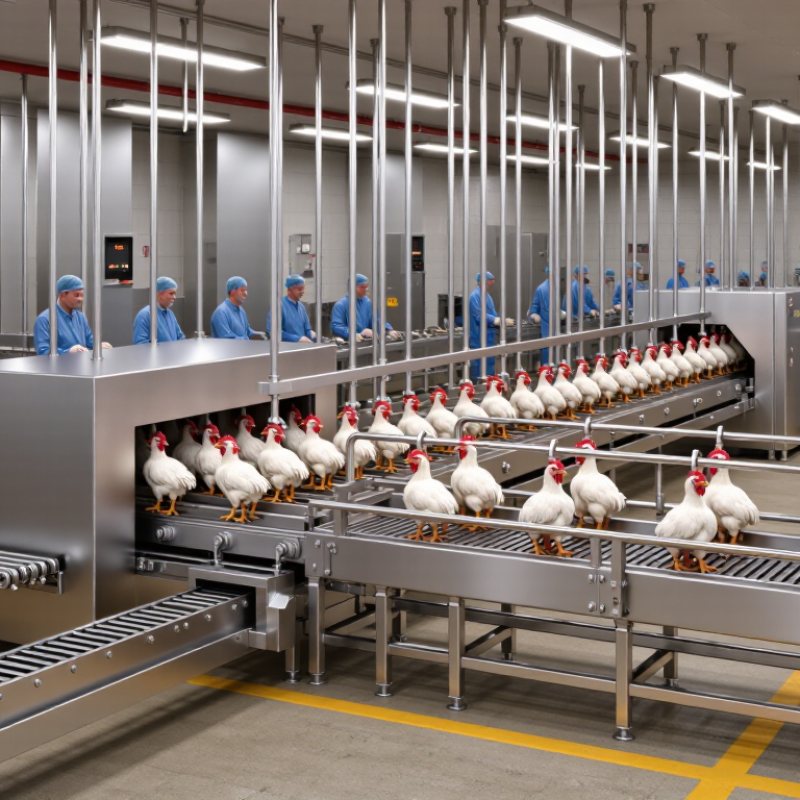
Choosing a poultry processing line is not simply a matter of comparing hourly capacity figures. The right setup must fit the plant’s product mix, available floor space, staffing, sanitation routines, and maintenance skills. A line that looks efficient on paper may cause bottlenecks when birds arrive unevenly or a key conveyor stops. Small details matter: belt width, washdown access, blade availability, and how quickly a worn bearing can be replaced. Not glamorous, but important.

Animal welfare and reliable operation belong in the same discussion. Temple Grandin, a renowned animal-behavior scientist and livestock-handling expert, has said, “I think using animals for food is an ethical thing to do, but we have to do it right.” That principle gives buyers a useful lens: assess how equipment supports calm handling, consistent process control, and safe, routine cleaning. Then check whether the supplier can provide clear specifications, operator training, and dependable technical support. Ask for references from plants with similar products and operating conditions. Verify spare-part compatibility before purchase, rather than assuming that visually similar components will fit.

This guide examines how to compare line capacity, automation, layout, and service requirements, then build a practical spare-parts plan. It also notes a limitation: no checklist can replace a site assessment by qualified people who understand the plant. The phrase “Poultry Slaugtering Line And Spare Parts” may be an awkward search term, but the decision behind it is concrete. Choose equipment for the work your team actually performs, and review the choice when production changes.

How to Choose a Poultry Slaughtering Line and Spare Parts

Assess Processing Needs, Bird Types, and Regulatory Requirements

A poultry slaughtering line should match the birds you process, not just a target number on a sales sheet. Estimate peak and average daily volume, then consider bird weight, size variation, and species. Broilers, older hens, and turkeys may need different shackles, cutting settings, or handling space. Ask suppliers to demonstrate adjustments using birds similar to yours. Small details matter.

Walk through the product path, from receiving to chilling and packing. Note where staff move birds, where water collects, and how equipment can be cleaned. A line that runs quickly but is difficult to sanitize may create costly delays. Measure your building, too. Door widths, floor drains, ceiling height, and available utilities can limit equipment choices. I have seen plans overlook a drain location; it is a simple mistake, but not a cheap one.

Regulatory requirements vary by location and product. Confirm applicable food-safety, animal-welfare, worker-safety, sanitation, and wastewater rules with qualified local authorities before finalizing the layout. Check whether the design supports hygienic separation, cleaning access, process records, and traceability. Then review spare parts: identify wear items, confirm fit with the selected line, and ask about realistic delivery times. Keep critical parts on hand, but avoid stocking components without checking actual usage. The paperwork can look complete. Recheck it against the floor plan and daily workflow.

How to Choose a Poultry Slaughtering Line and Spare Parts

Assess processing needs, bird types, and regulatory requirements. These throughput figures are arithmetic equivalents of continuous line speeds—not equipment ratings or regulatory limits.

Hourly throughput = birds per minute × 60. Actual output depends on bird size and species, line configuration, downtime, staffing, and applicable inspection and animal-welfare rules. Confirm approved operating speeds and spare-part compatibility for your facility.

Compare Line Capacity, Layout, and Processing Stages

A poultry line’s rated capacity is only a starting point. Compare birds per hour with flock size, shift length, and expected downtime. A line that runs too fast can overload chilling, evisceration, or inspection stations. That mismatch is costly. Ask for practical output figures, not just peak speed, and check the assumptions behind them. Capacity should fit routine work, with some room for seasonal increases.

The building layout affects how that capacity works in practice. Measure the available floor space, ceiling height, drainage, and access for cleaning and maintenance. A straight line may suit a long, narrow room, while a compact layout can reduce walking in a smaller facility. Keep staff routes clear of product flow where possible. Measure twice. Even careful plans can miss awkward columns or pipework.

Compare the proposed processing stages, from scalding and defeathering through evisceration, washing, and chilling. Each stage needs enough time and space to avoid becoming a bottleneck. Check which components wear most often, such as shackles, bearings, and conveyor links, and confirm that replacements are easy to identify and store. Spare-parts planning is sometimes treated as an afterthought. It should reflect the actual line design, maintenance skills, and realistic delivery times.

Evaluate Equipment Hygiene, Automation, and Operator Safety

When comparing poultry slaughtering lines, inspect surfaces where moisture and tissue collect: hollow rollers, belt joints, and drain edges. Stainless steel alone does not guarantee cleanability. Ask whether guards, trays, and contact parts can be removed without special tools, and whether washdown reaches their undersides. Look for smooth welds and sloped surfaces that drain instead of holding water. Small details matter.

Assess automation by tracing each bird through conveying, transfer, and cutting stations. Sensors should detect jams or irregular spacing, while controls let operators stop sections without reaching across moving equipment. Request a demonstration at realistic production speeds; a showroom cycle may hide difficult changeovers. Automation reduces repetitive handling, but it adds maintenance tasks. Identify critical spare parts, such as belts, bearings, seals, and sensor cables, and store them in dry, labeled bins. Clear replacement guidance matters too.

Review operator safety on site. Check emergency-stop access, fixed guarding, non-slip flooring, and safe platforms near inspection points. Observe how workers lift tools and clear blockages; a tidy-looking design may still encourage awkward reaching. Ask for cleaning procedures and training records for routine adjustments. A brochure alone is weak evidence. A short trial can reveal noise, splash, or bottlenecks missed during planning. No checklist catches every awkward task.

Choose Compatible Spare Parts and Check Their Availability

Compatibility is more than matching a spare part’s name. Check the line model, installation year, and equipment position before ordering. A conveyor belt may look right but differ in width, material, or drive connection. Small mismatch, big pause. Compare dimensions with the existing part, and confirm food-contact materials and cleaning requirements with the equipment documentation.

A common maintenance mistake is checking compatibility but not availability. Ask suppliers about current stock, realistic lead times, and whether critical items can be reserved. Confirm that seals, bearings, blades, and sensors are supplied individually, not only in large kits. Keep records. Note part numbers, measurements, and replacement dates beside the machine. Photos of connectors and mounting points can also help prevent ordering errors. Even careful checks can miss changes made during an earlier repair, so inspect the installed part rather than trusting old paperwork alone. For parts with long lead times, keep a small, suitable stock based on wear history and the production schedule. Spare parts still need periodic checks; stored seals, for example, may degrade if exposed to heat or sunlight.

Verify Supplier Support, Installation, and Lifecycle Costs

When comparing poultry slaughtering lines, assess the supplier’s support as carefully as the machine’s hourly capacity. The OECD-FAO Agricultural Outlook 2024–2033 projects poultry to account for nearly half of additional global meat production over the decade. That growth makes dependable commissioning and maintenance important. Ask for a written installation scope, named commissioning staff, operator training hours, and response-time targets. Downtime gets expensive. Confirm which wear parts are stocked locally, how quickly they ship, and whether drawings and parts lists are included. A low quote means little if a worn conveyor belt stops the line for days.

Build a lifecycle estimate covering equipment, installation, utilities, sanitation, labor, and replacement parts over a stated period. Request realistic consumption figures for water and energy, then compare them with your own plant conditions. Ask suppliers to identify assumptions; estimates can be incomplete, and that deserves a second look. During a reference-site visit, observe changeovers, cleaning access, and how technicians reach bearings or sensors. Small details matter. Check whether training covers fault diagnosis, not just startup. Keep a record of quoted part numbers, service commitments, and exclusions before signing. A simple cost sheet can expose recurring expenses that the purchase price hides.

How to Choose a Poultry Slaughtering Line and Spare Parts — Verify Supplier Support, Installation, and Lifecycle Costs
Evaluation Area What to Verify Evidence to Request or Check Lifecycle Cost or Risk
Processing capacity Confirm the proposed line’s rated birds per hour and the capacity of each connected process, including defeathering, evisceration, chilling, and packing. Request a process-flow diagram and written capacity assumptions. Check whether the figure depends on bird size, staffing, product mix, or operating hours. A capacity mismatch can cause bottlenecks, reduced throughput, extra labor, or investment in equipment that is larger than needed.
Product and bird specifications Check that equipment is suitable for the expected bird-weight range, product types, and required cut-up or whole-bird operations. Provide representative bird-weight ranges and product requirements. Ask for confirmation of compatible shackles, tooling, and adjustment ranges. Unsuitable settings or tooling may increase product damage, changeover time, and replacement-part consumption.
Line integration Review how equipment connects across each process stage, including conveyors, transfer points, controls, and operator access. Request a layout drawing showing equipment interfaces, operating positions, maintenance clearances, and material flow. Poorly coordinated interfaces can create stoppages, additional modification work, and difficult maintenance access.
Hygienic design and cleaning Inspect access for cleaning and maintenance, drainage arrangements, and the suitability of materials and construction for the intended washdown routine. Review cleaning instructions and equipment drawings. Confirm which components require removal, inspection, or scheduled sanitation. Cleaning time, water use, and downtime affect operating costs. Inadequate cleaning access can make routine sanitation harder to perform consistently.
Installation and commissioning Clarify who is responsible for mechanical installation, electrical connections, commissioning, performance checks, and coordination with local contractors. Request a written scope of work, project schedule, site-readiness checklist, commissioning plan, and list of customer-supplied services or labor. Unclear responsibilities can lead to schedule delays, contractor changes, extra travel or labor charges, and delayed production start-up.
Utilities and site requirements Confirm electrical supply, water, compressed air, drainage, floor loading, and any ventilation or temperature requirements applicable to the selected equipment. Compare equipment utility schedules with the site’s available capacity. Verify connection sizes, operating loads, and local electrical requirements before ordering. Utility upgrades and building modifications can add capital cost and extend the installation schedule.
Operator and maintenance training Check whether training covers safe operation, routine adjustments, cleaning, fault identification, and basic preventive maintenance. Request a training agenda, language options, trainee limits, training location, and details of any included or chargeable sessions. Insufficient training can increase setup errors, downtime, and reliance on external service visits.
Spare-parts availability Identify critical wear parts and components that could stop production if unavailable. Confirm ordering procedures and expected dispatch arrangements. Request a recommended spare-parts list with part descriptions, quantities, lead-time information, and any storage or shelf-life guidance. Long replenishment times may increase the need for on-site inventory. Stocking too many parts ties up working capital and storage space.
Parts interchangeability Check whether commonly replaced items use standard or equipment-specific dimensions and whether part numbers are clearly documented. Request parts manuals, exploded diagrams, material specifications where relevant, and written confirmation of compatibility across supplied equipment. Limited interchangeability can increase procurement complexity and the number of different parts kept in inventory.
Technical support and service response Confirm support hours, contact channels, remote troubleshooting options, service-area coverage, and the process for arranging on-site assistance. Request written service terms, escalation contacts, applicable response targets, and a clear explanation of travel, labor, and call-out charges. Service availability and response arrangements affect the duration and cost of production interruptions.
Warranty and exclusions Review warranty duration, start date, covered components, maintenance obligations, and exclusions such as wear items or improper operation. Read the full warranty terms and check what documentation is required for claims, including maintenance records and commissioning records. Unclear exclusions can leave repair, replacement, or travel costs with the owner. Include post-warranty support in the comparison.
Preventive maintenance Check the recommended inspection, lubrication, adjustment, and replacement tasks and their stated intervals. Request maintenance schedules and manuals. Confirm which tasks can be performed by trained site staff and which require specialist service. Planned maintenance uses labor and parts but can help identify wear before it causes an unplanned stoppage.
Operating energy and water Compare the expected electrical load and water use for the proposed configuration under the intended operating schedule. Request equipment utility data and document local electricity and water tariffs. Calculate annual usage using actual planned operating hours. Annual utility cost can be estimated as consumption per operating hour multiplied by annual operating hours and the applicable local tariff.
Total cost of ownership Compare purchase and installation costs with utilities, labor, consumables, spare parts, maintenance, service, and expected downtime. Use the same evaluation period and operating assumptions for each quotation. Separate one-time costs from recurring costs and state currency and tax treatment. A lower purchase price does not necessarily mean a lower lifecycle cost if installation, service, utilities, or replacement parts are more expensive.
Documentation and handover Confirm delivery of operating manuals, electrical and mechanical drawings, parts lists, safety information, and commissioning records. Include a document checklist and handover requirements in the purchase specification. Confirm that documents match the installed configuration. Complete, accurate documentation supports safer operation, troubleshooting, maintenance, and future parts ordering.
wpChatIcon
wpChatIcon