

Plastic Injection Molds are crucial in manufacturing. They allow for the creation of intricate designs with precision. For beginners, understanding how to use these molds can feel overwhelming.
The techniques surrounding Plastic Injection Mold production can be complex. Many beginners struggle with settings and materials. A common issue is not achieving the desired finish. This can come from improper temperature control or incorrect material selection. It’s important to learn from these mistakes to improve.
Success in this field requires practice and patience. Beginners should not be deterred by initial failures. Embracing flaws can lead to significant improvements. With the right guidance and experience, anyone can master the art of Plastic Injection Mold techniques.
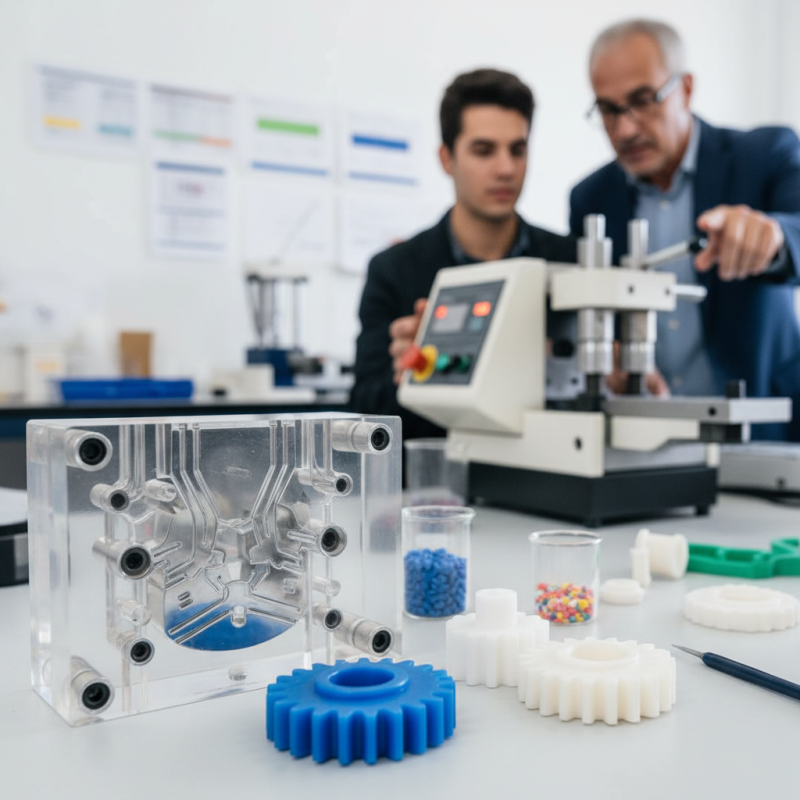
Plastic injection molding is a vital process in manufacturing, allowing for the creation of complex parts with high precision. For beginners, grasping the fundamentals can feel overwhelming. Industry data suggests that the global plastic injection molding market is projected to reach $469.8 billion by 2027, reflecting its importance in various sectors. Understanding the basics is essential to leverage this growing field effectively.
Tips: Start with simple designs. Complex molds can lead to errors and increased costs. Always prioritize functionality over aesthetics when designing your first mold.
The injection molding process involves melting plastic pellets and injecting them into a mold. Once cooled, the plastic takes the mold shape. Beginners often struggle with temperature control and pressure settings. These factors can significantly affect the quality of the final product. Research indicates that improper settings can lead to defects like warping or incomplete fills.
Tips: Experiment with varying temperatures. Document results to identify the optimal settings. Don't hesitate to seek feedback from more experienced peers. Mistakes are common and can become excellent learning opportunities.

Understanding the components of injection molds is essential for anyone starting in plastic injection molding. At the heart of this process are three key parts: the mold cavity, the core, and the ejection system. The mold cavity shapes the plastic, while the core forms the interior details. These components must be precise. An error in any of them can lead to defects, reducing product quality.
In 2022, research indicated that around 30% of injection-molded parts failed to meet specifications due to improper mold designs. This highlights the importance of understanding mold functions. Each component plays a role in ensuring the final product meets standards. For instance, the ejection system needs to operate smoothly to remove parts without damage. Insufficient force could result in deformities.
Common issues arise when beginners overlook the cooling channels within molds. These channels manage temperature during production. If not designed correctly, they can create hot spots, leading to uneven surfaces. Awareness of these components helps to mitigate risks and improve efficiency. Investing time in learning their functions pays off in the long run.
Creating a plastic injection mold can be both exciting and challenging, especially for beginners. The process begins with designing the mold. It’s essential to consider the dimensions and the material properties. Precision is critical. For instance, a 2020 report from the Injection Molding Association noted that 90% of mold defects stem from design errors. Such mistakes can lead to costly revisions.
Once the design is complete, the next step is material selection. Common materials include steel and aluminum. Steel molds last longer but are costlier. A novice might lean toward aluminum for shorter production runs. However, this choice may result in poor quality over time. After selection, the actual manufacturing of the mold starts. This involves machining, where accuracy is key. A slight deviation can ruin the entire mold, leading to unexpected production costs.
After the mold is created, testing is vital. Molding conditions should be evaluated to ensure efficiency. Reports indicate that improper testing leads to a 40% increase in production time. Beginners often overlook this. Observing how the mold performs under real conditions can provide invaluable insights. It’s a learning curve, filled with trials and errors.
| Technique | Description | Best Suited For | Pros | Cons |
|---|---|---|---|---|
| Hot Runner Molding | A process that uses heated channels to deliver molten plastic to the mold. | Complex shapes and high-volume production. | Reduces waste, improves cycle time. | Higher initial cost, requires precise temperature control. |
| Cold Runner Molding | Uses a cooling method to channel the plastic to the mold. | Simpler designs and lower production volumes. | Lower initial cost, easier to set up. | Increased waste, longer cycle time. |
| Injecting Molding Simulation | Using software to predict how the plastic will flow in the mold. | Makers looking to optimize designs. | Identifies potential problems before production. | Requires software investment and training. |
| Multi-Cavity Molding | A method that allows multiple identical parts to be made in one cycle. | High-volume production. | Maximizes output and reduces costs. | Higher mold complexity and cost. |
| Insert Molding | Integrating metal inserts or other components into the plastic part during molding. | Applications requiring additional strength. | Improved part performance and reduced assembly needs. | More complicated process, potentially higher costs. |
Designing and fabricating injection molds can be quite challenging for beginners. Understanding the common techniques is crucial. According to recent industry reports, around 70% of new mold designers struggle with drafting accurate designs. A strong foundation in CAD software is essential. These tools help visualize the mold, ensuring precision in dimensions.
One key technique is the use of standard mold components. This approach can simplify the design process. Many designers overlook this, leading to unnecessary complexities. Another area to focus on is cooling channel design. Inefficient cooling can result in defects and longer cycle times. A study revealed that optimizing cooling can reduce cycle time by 25% or more.
In addition, beginners should be aware of material selection. Using incompatible materials can cause poor mold performance. This is a frequent mistake. Lastly, regular mold maintenance and adjustments in design are vital. Continuous reflection on these factors can greatly improve the fabrication process. The journey may seem daunting, but embracing these techniques leads to better outcomes.
When starting with plastic injection molding, troubleshooting common issues is crucial. Many beginners face challenges like warping or short shots. Warping occurs when the molded part deforms as it cools. This can happen if the temperature settings are not correct or if the part design is flawed. Adjusting the cooling time or the material's thickness might resolve this issue. Beginners should pay close attention to these details.
Short shots happen when not enough material fills the mold. This is often due to insufficient material feed or incorrect mold temperature. A common fix is to increase the injection speed or pressure. Regularly checking the feed system can prevent this problem. Sometimes, it’s easy to overlook the simple things, like ensuring there are no clogs in the system. Minor adjustments can make a significant difference.
Another issue is surface imperfections on the molded part. These can occur from improper surface treatment or contamination. Cleaning the mold before each use may help reduce these defects. Additionally, testing different release agents can lead to better results. Reflection on these challenges helps improve skills over time. Learning from mistakes is key in becoming proficient in injection molding.