Blog

What Are the Top Types of Rigid Packaging?

Rigid Packaging is easy to recognize: a glass jar keeps its shape on a shelf, a steel can protects food, and a molded plastic tub holds its form in transit. The category also includes paperboard cartons and other sturdy containers. Each type offers different strengths in protection, weight, visibility, and recyclability. The right choice depends on the product, its journey, and the facilities available to recover the material.

The scale is substantial. Smithers’ report The Future of Packaging: Long-Term Strategic Forecasts to 2029 estimates that the global packaging market will reach about $1.2 trillion by 2029. That figure covers packaging overall, not rigid formats alone—a distinction worth keeping clear. Ellen MacArthur, founder of the Ellen MacArthur Foundation, has said: “A circular economy is based on three principles, driven by design: eliminate waste and pollution, circulate products and materials (at their highest value), and regenerate nature.” Her point matters here: a sturdy pack is not automatically a sustainable one. Material choice, reuse potential, and local collection systems all count.

What are the top types of Rigid Packaging? This guide compares glass, metal, paperboard, and rigid plastics through practical uses and trade-offs. A clear bottle may show the product beautifully, yet weigh more than a plastic alternative. A can protects well, but still needs the right recovery stream. There is no perfect format. There are better-informed choices.
What Are the Top Types of Rigid Packaging?

What Defines Rigid Packaging?

What Are the Top Types of Rigid Packaging?

What Defines Rigid Packaging?

Rigid packaging keeps its basic shape when empty and resists easy squeezing or folding. A glass jar, metal tin, or sturdy plastic tub are familiar examples. Set one on a table, and its walls remain upright without support. It holds its shape.

This structure can protect contents from crushing, make packages easier to stack, and support closures such as lids or caps. Its strength depends on more than material alone. Wall thickness, shape, seams, and closure design all affect how well a package performs. A thin-walled container may flex, while a carefully shaped one can remain stable with less material.

Rigid packaging is often contrasted with flexible packaging, such as pouches, which bend readily around their contents. The boundary is not always neat. Some containers have rigid bodies with flexible seals or labels, so classification can depend on which part is being considered. When choosing a format, consider the product’s weight, storage conditions, and how the package will be handled. A container that feels solid in a shop may still be vulnerable to a hard drop. That detail is easy to overlook.


How Is Rigid Packaging Classified?

Rigid packaging is commonly classified by material, form, and intended use. These categories overlap, so one container may fit several descriptions. No single scheme captures every design detail.

Material is a practical starting point. Glass jars and bottles are rigid, transparent, and resistant to many contents, but they can be heavy and breakable. Metal cans and tins provide strong barriers against light and moisture. Rigid plastic containers, such as tubs, trays, and bottles, are light and can be molded into varied shapes. Some molded fiber and thick paperboard packages also hold their form, though their resistance to moisture varies.

Form offers another useful classification. Bottles, jars, cans, boxes, and trays each support different filling and handling needs. A narrow-neck bottle pours liquids; a shallow tray keeps products arranged and visible. Function matters, too: primary packaging touches the product, while secondary packaging groups or protects primary packs during storage. These distinctions are useful, but not always neat. A lidded tray, for example, may serve both roles depending on how it is packed and sold. When comparing types, consider the product’s weight, sensitivity to light or moisture, and the journey from filling line to shelf. Details matter.

What Are the Main Types of Rigid Packaging?

Rigid packaging keeps its shape during filling, stacking, and transport. Common types include glass bottles and jars, metal cans, plastic tubs and bottles, and rigid paperboard boxes. Each works differently. A glass jar feels sturdy on a shelf and can show the product clearly, but its weight and breakage risk may affect shipping choices.

Metal cans provide a firm barrier against light and air, making them useful for many foods and beverages. Rigid plastic containers are lighter and can be molded into shapes such as wide-mouth tubs or narrow-neck bottles. Their performance depends on the resin, wall thickness, closure, and contents. A cap that feels secure in the hand still needs testing for leaks during transport.

Paperboard cartons offer a broad printable surface and hold their form well, though moisture can weaken some constructions. Trays, boxes, and protective inserts may use layered or coated materials, so disposal options vary. Details matter. In practice, teams compare product weight, filling temperature, stacking loads, and how easily customers can open the pack. No type is best in every case; sometimes a familiar container creates more material use than the product needs. That trade-off deserves a closer look.

What Are the Top Types of Rigid Packaging?

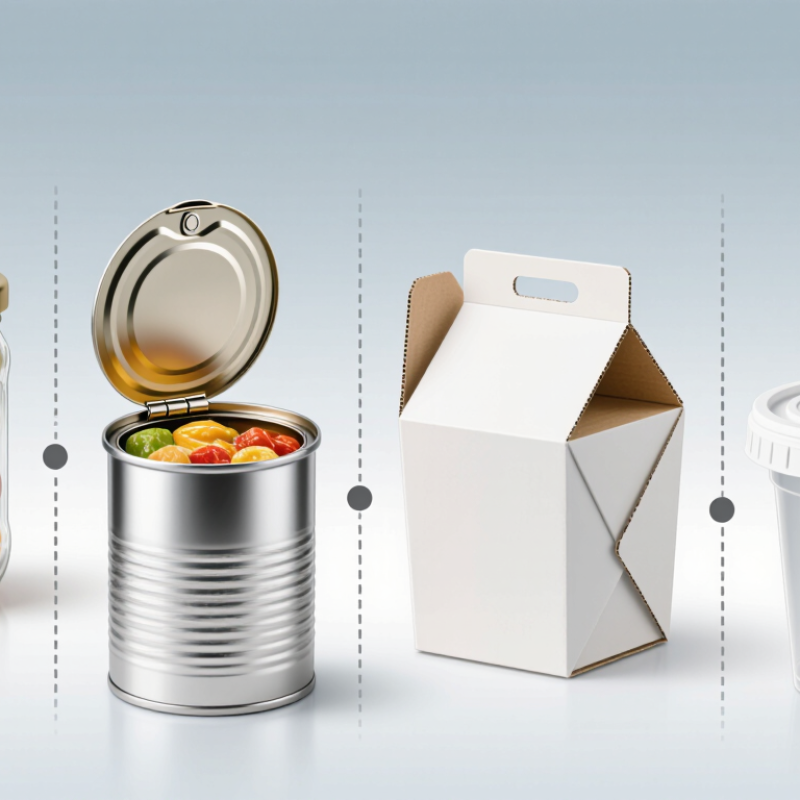
Common rigid packaging categories and examples of formats used for each.

Rigid plastic, glass, metal, and paperboard are widely used for containers and packages that hold their shape. Counts show the example formats listed here—not market share or production volume.

Which Materials Are Commonly Used?

Rigid packaging commonly uses plastic, paperboard, glass, and metal. Each behaves differently on a warehouse shelf. PET and HDPE are light and resist moisture, making them useful for bottles and tubs. Polypropylene handles heat well, so it suits some food containers. Paperboard offers a printable, lighter alternative, while glass provides a strong barrier but adds weight. Aluminum and steel protect contents from light and oxygen, though their weight and forming requirements affect shipping and design.

The OECD’s Global Plastics Outlook reports that packaging accounted for 40% of global plastic waste in 2019. That figure covers packaging broadly, not rigid formats alone, but it highlights why material choice matters. A clear PET jar may show the product, yet a dark pigment or mixed-material lid can complicate sorting. Glass feels reassuringly solid. It can also break in transit. No material is automatically the best choice; product sensitivity, transport distance, and local recycling access all matter.

Tips: Match the material to the product before choosing by appearance. Check barrier needs, closure compatibility, and likely recycling routes. Ask suppliers for material specifications and test filled packs under real storage conditions. Small details matter: a tight-fitting lid can prevent leaks, but it may also make separation harder. Some packaging decisions remain trade-offs, not perfect answers.

What Are the Top Types of Rigid Packaging? - Which Materials Are Commonly Used?

Rigid Packaging Type Common Materials Typical Uses Key Characteristics End-of-Life Considerations
Glass containers Soda-lime glass; sometimes borosilicate glass for products needing greater thermal resistance Bottles and jars for beverages, food, cosmetics, and medicines Rigid, nonporous, and highly effective as a barrier to gases and moisture; can be heavy and breakable Often accepted for recycling where glass collection is available; color sorting and local collection rules may apply
Metal cans and containers Aluminum and tin-plated steel Food and beverage cans, aerosol cans, tins, and specialty containers Strong and opaque; metal containers can provide good protection from light, impact, and gases when properly sealed Aluminum and steel are widely recyclable in many regions; collection and sorting availability varies
Rigid plastic bottles and jars PET, HDPE, and PP Beverages, household products, personal-care items, and food Lightweight and impact-resistant; material choice affects clarity, chemical resistance, and barrier performance Some PET and HDPE formats are commonly collected for recycling; acceptance depends on local systems and package design
Rigid plastic tubs, trays, and pots PP, PET, HDPE, and, in some applications, polystyrene (PS) Food tubs, produce trays, dairy containers, and storage packaging Can be molded into a wide range of shapes; stiffness, heat tolerance, and clarity vary by polymer Recycling access varies considerably by resin type, shape, color, and local collection program
Rigid paperboard cartons and tubes Paperboard or paperboard combined with barrier coatings or other materials Cylindrical food containers, gift boxes, and protective cartons Lightweight and printable; generally needs coatings or liners when stronger moisture or grease resistance is required May be recyclable with paper where accepted; plastic liners, foil, or coatings can affect processing
Corrugated boxes and cases Corrugated fiberboard made from paper liners and a fluted paper medium Shipping, storage, and transport of packaged goods Lightweight for its strength; cushioning and stacking performance depend on board grade and box design Widely recyclable when clean and dry in many regions; waxed or heavily contaminated boxes may not be accepted
Wooden crates and boxes Solid wood, plywood, or other engineered wood products Heavy, large, or fragile goods; industrial shipping and produce transport Rigid and capable of carrying substantial loads; typically bulkier than paper- or plastic-based options Can often be reused or repaired; disposal and recycling options depend on treatment, coatings, and local facilities

Note: Material performance and recycling availability depend on package design, local collection systems, and processing facilities.

How Do Industries Choose the Right Type?

Choosing rigid packaging starts with the product, not the container. A glass jar can protect aroma and resist chemical interaction, but its weight raises transport needs. PET bottles are lighter and suit clear displays; metal cans block light and withstand pressure. For a fragile cream, a wide-mouth tub may make filling and use easier. For a liquid, check closure performance, leak risk, and compatibility with the filling line. Small details matter: a cap that loosens during transit can undo careful material selection.

Waste data adds another test. The OECD’s 2022 Global Plastics Outlook estimates that packaging generated about 40% of global plastic waste in 2019. The US EPA reported that containers and packaging made up 28.1% of US municipal solid waste in 2018, or 82.2 million tons. These figures cover broad packaging categories, not rigid formats alone. Still, they show why end-of-life options deserve attention. Check whether local collection systems accept the chosen material, and avoid combining materials when separation is impractical. A technically recyclable pack may not be recycled nearby. That gap is easy to overlook. Compare protection, shelf life, line speed, shipping weight, and local recovery together; no single metric gives the full answer.

wpChatIcon
wpChatIcon